


Are you thinking about trying casual dating? It has become a common part of modern dating, but it only works well when both people understand what it actually means. This guide explains what casual dating is, how it works, who it suits, and what can go wrong when expectations do not match.
Meaning of casual dating
Casual dating means spending romantic or intimate time with someone without expecting a long-term commitment. It can range from occasional dates to an ongoing connection that is not exclusive or future-focused. The emphasis is usually on enjoying the present rather than planning marriage, cohabitation, or a serious shared future.
Many people choose casual dating when they are not ready for a committed relationship. Others want companionship, intimacy, or space to focus on personal goals without the pressure of building something long-term. For example, someone who has just moved to a new city may want a connection without immediately building a serious relationship. Another person may simply not have the emotional space for long-term commitment at that point in life.
Difference between casual dating and a casual relationship

People often use "casual dating" and "casual relationship" interchangeably, but they are not always exactly the same.
Casual dating usually means going out or spending time together without clear expectations of exclusivity or long-term commitment. A casual relationship usually suggests a more ongoing connection that may include emotional or sexual intimacy but still does not involve traditional commitment.
Casual dating is usually lighter, less structured, and more open-ended. A casual relationship is often more consistent and emotionally connected, even if it still does not fit the usual idea of a committed partnership.
For example, two people might go on dates once in a while without defining the connection. That would usually be casual dating. Another pair might spend weekends together regularly and feel emotionally close, but still not see themselves as building a serious long-term relationship. That would be closer to a casual relationship.
Core features of casual dating
Casual dating usually involves flexibility, low pressure, and freedom from long-term expectations. It gives both people room to enjoy each other’s company without treating the relationship as a major life decision.
Here are some common features of casual dating:
- No long-term planning together.
- A stronger focus on fun, experience, and companionship.
- Honesty about whether other people are involved.
- Limited integration into family or social life.
These features make casual dating appealing to people who are still figuring out what they want or who simply want connection without future obligations. In practice, this often means fewer conversations about the future, less pressure to define the relationship quickly, and more attention to whether the connection feels enjoyable right now.
The role of intent and personal goals in casual dating

Intent is central to casual dating because both people need to be clear about what they want. Personal goals shape how much time, energy, and emotion each person is willing to invest.
Some people date casually because they want to explore their options before committing. Others do it because they want to focus on work, personal growth, or friendships without the responsibilities of a serious relationship. Some simply enjoy companionship and intimacy but do not want strict labels.
Being clear about intent helps prevent mixed signals. If one person secretly hopes the connection will become serious and the other does not, disappointment becomes much more likely. That is why it helps to talk about intentions early instead of assuming you are both on the same page.
"People don’t know what you want. It’s your job to make it clear. Clarity saves relationships."
Nedra Glover TawwabLicensed therapist, founder of Kaleidoscope Counseling, relationship and boundaries expert
A useful way to approach this is to ask simple direct questions early on: “Are you looking for something light or something that could grow later?”, “Are you open to exclusivity?”, “Do you want emotional closeness, or mostly company and fun?” These questions may feel awkward at first, but they create far less confusion later.
The importance of boundaries and consent
Some people assume casual dating means there are no rules or limits. In reality, boundaries and consent matter just as much in a casual connection as they do in a serious one.
Boundaries and consent keep casual dating healthy, respectful, and safe. Both people need to be clear about what feels comfortable, whether that involves emotional availability, communication frequency, exclusivity, or physical intimacy.
Consent should always be ongoing, enthusiastic, and respectful. That applies not only to physical intimacy but also to communication and expectations. One person may not want daily texting, while the other may prefer occasional check-ins.
Clear boundaries reduce misunderstandings and help both people feel respected. It is always better to discuss them early than to leave them vague. For example, it helps to talk about how often you want to meet, whether sleepovers feel normal to both of you, whether you are seeing other people, and what happens if one person starts wanting more.
Rules and etiquette of casual dating

Yes, casual dating still comes with rules. The main ones are honesty, respect, clear communication, and safe behavior.
General etiquette in casual dating includes:
- Being transparent about seeing other people.
- Not leading someone on with promises you do not mean.
- Practicing safe sex.
- Treating each other with kindness, even if the relationship is not serious.
Casual dating works best when both people act with maturity and empathy. Ghosting, lying, or using someone for convenience usually creates mistrust and unnecessary hurt. Even in something casual, basic respect and consistency still matter. Casual does not mean careless.
Communication and expectation management
Good communication means stating your intentions early and checking in as the connection develops. Both people should know whether the relationship is mostly physical, occasional, emotionally supportive, or somewhere in between.
Managing expectations often means answering questions like:
- Are we seeing other people?
- Will we spend special occasions together?
- How often will we meet?
- How much communication feels normal between dates?
These conversations help prevent silent assumptions, which are often what create tension later.
If you are dating someone casually, ask what "casual" means to them. People use the word differently, so it is better to define it together than to guess. For one person, casual may mean occasional dates and no exclusivity. For another, it may mean emotional closeness without long-term plans. The word is simple, but the meaning often is not.
Exclusivity in casual dating

Exclusivity is possible in casual dating, but it is not the default. Some people choose to be exclusively casual, meaning they only see each other but still are not building a traditional long-term relationship.
Transparency matters here. If one person expects exclusivity while the other assumes they are both free to see other people, the situation can become unfair very quickly. Casual dating can work with exclusivity, but only when both people agree on it clearly.
In real life, this often happens when two people enjoy each other enough to stop seeing others, but still do not want labels like partner, boyfriend, or girlfriend. That setup can work, but only if both people truly want the same arrangement.
Emotional well-being in casual dating
Casual dating can affect emotional well-being in both positive and negative ways. It can bring fun, confidence, freedom, and companionship without the weight of major commitment. But it can also create insecurity, jealousy, or disappointment when expectations do not match.
Some people do very well in this kind of dating. Others find that they become attached more quickly than they expected. That is why self-awareness matters. It helps to know your emotional limits, your triggers, and what kind of connection actually feels good to you.
A simple question to ask yourself is this: “Do I enjoy this connection as it is, or am I staying in it because I hope it will become something else?” That answer often tells you whether casual dating is still working for you.
"The quintessential question of self-compassion is 'What do I need right now?'"
Kristin NeffPioneering researcher and teacher of self-compassion
How to start casual dating successfully
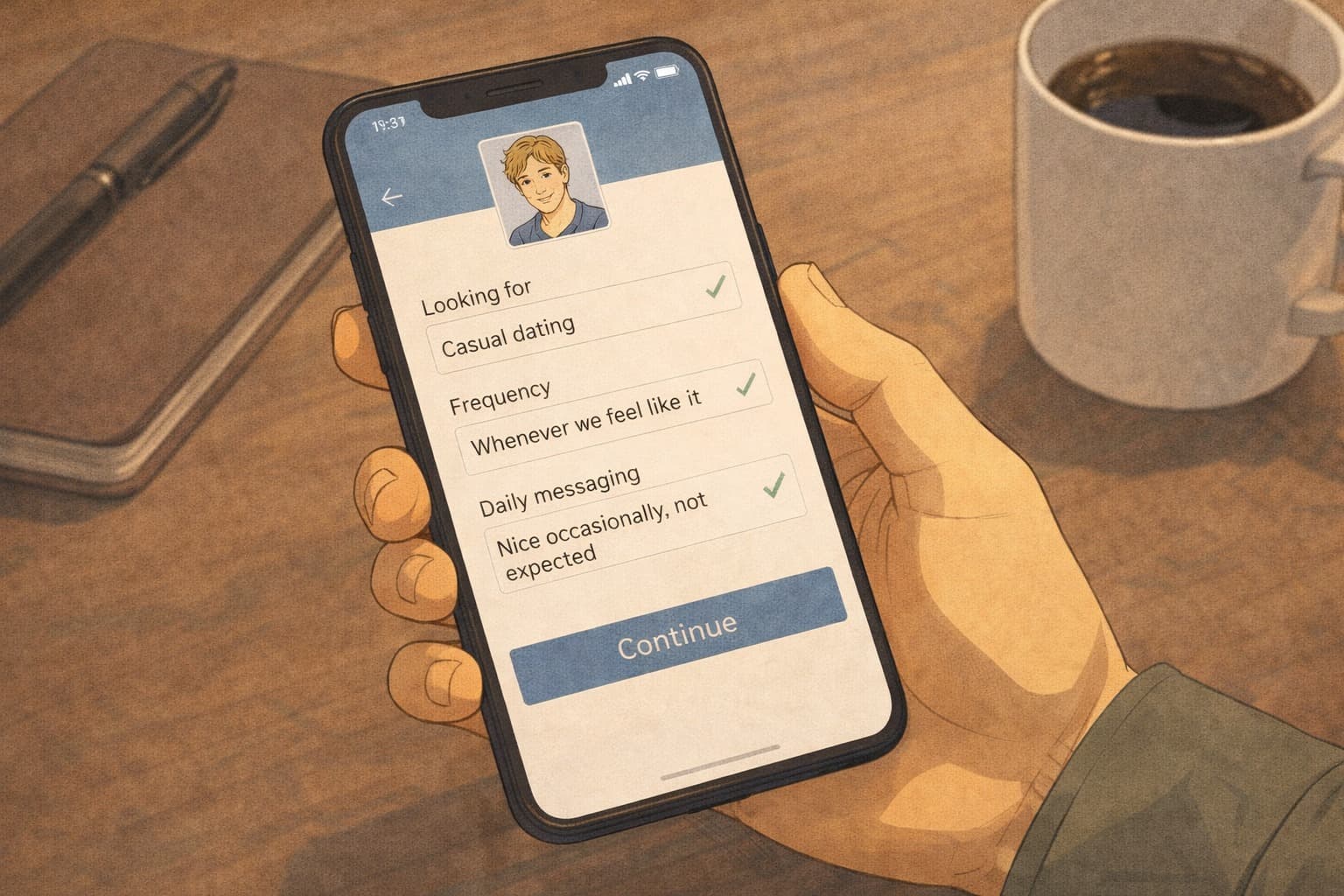
A good way to start casual dating is to be clear about your intentions and choose settings that match them. Dating apps, social circles, and low-pressure social situations are common entry points.
Here are a few helpful tips:
- Say openly that you are looking for something casual.
- Avoid half-truths or vague promises.
- Keep things light in the beginning.
- Respect the other person’s time, space, and lifestyle.
When honesty and boundaries are present from the start, casual dating tends to feel much less confusing. It also helps to choose people whose current goals actually match yours instead of hoping they will adapt later.
Common formats of casual dates
Casual dates are usually relaxed and low-pressure. The first meeting might be coffee or drinks. Later, it could be a concert, a walk, a movie night, or grabbing food together.
A casual date should not feel like an audition for a future life together. It should feel easy, enjoyable, and comfortable. Compared with more formal dating, the focus is usually less on making a perfect impression and more on enjoying the moment.
For example, a casual date may be a quick drink after work, a Saturday walk, or a late dinner without any pressure to define what the evening means for the future.
Casual dating in the digital context

Dating apps have made casual dating much more visible and accessible. Platforms like Meetty, Bumble, Tinder, and Hinge let people state what they are looking for and connect with others who want something similar.
Messaging also makes it easy to stay in touch without a strong sense of obligation. At the same time, digital dating can create its own problems, including ghosting, catfishing, mixed signals, and inconsistent communication. Clear digital boundaries can help reduce these issues.
You might be interested in our article "Best online dating questions that keep conversations flowing"
For example, it helps to decide early whether you both like daily texting, whether late-night messages are normal, and how much communication feels respectful rather than random or one-sided.
Transitioning or exiting casual dating
Leaving a casual dating situation works best when you are honest and direct. A short, respectful conversation is usually better than fading away or disappearing.
For example, you might say that:
- you now want a serious relationship;
- the connection no longer feels right;
- you need to focus on other priorities.
Ending things clearly helps reduce confusion and protects both people’s dignity. Even a casual connection deserves a respectful ending.
Gender perspectives in casual dating

Men and women may experience casual dating differently because of social expectations. Women are often judged more harshly for dating casually, while men may feel pressure to avoid emotional vulnerability or attachment.
That said, dating culture continues to shift. More people now recognize that both men and women may want freedom, exploration, and companionship without immediate commitment. Even so, gender norms can still affect how comfortable people feel discussing casual dating openly.
In practice, this means some people may hide what they really want in order to avoid judgment. That makes honesty even more important. The healthier approach is to talk clearly about your own preferences instead of performing a role you think dating culture expects from you.
Red flags and risks in casual dating
Common red flags in casual dating include dishonesty, manipulation, disrespect for boundaries, and unsafe sexual behavior. One of the biggest risks is when one person quietly wants commitment and the other does not.
Other red flags include:
- poor communication;
- disrespect toward your time or feelings;
- refusal to discuss safe sex;
- using "casual" as an excuse for inconsiderate behavior.
It is better to address these problems early than to ignore them. Self-respect matters just as much in casual dating as it does in serious relationships.
Another strong warning sign is when the connection only works on one person’s terms. If you feel that you are always adapting, always waiting, or always pretending to be fine with less than you want, the arrangement is probably no longer healthy for you.
Conclusion: should you date casually?

Casual dating is not for everyone. For some people, it feels freeing, enjoyable, and realistic for their current stage of life. For others, it feels emotionally unsatisfying or too undefined.
The most important thing is to know yourself. What do you actually want from dating right now? If you are honest about your intentions, respect boundaries, and communicate clearly, casual dating can be a healthy experience. And if both people later want more, a casual connection can sometimes grow into a serious relationship.
A quick self-check can help. Casual dating may suit you if you want connection without long-term pressure, can handle ambiguity without constant anxiety, and are genuinely comfortable with the possibility that the relationship may stay limited. If that does not feel true, a more intentional dating style may be a better fit.