


If you are planning to start dating, understanding the difference between online dating and traditional dating can help you choose what suits you best. In simple terms, online dating involves using internet-based platforms to find a partner, while traditional dating usually means meeting a potential partner in person.
In this article, we compare online and traditional dating, break down their pros and cons, and show when each approach works better. By the end, you should have a clearer idea of which approach fits your personality and preferences.
Let’s take a closer look at the difference between online dating and traditional dating.
|
Factor |
Online dating |
Traditional dating |
|
Speed |
Fast - you can match within minutes |
Slow - takes time to meet people |
|
Number of options |
Very high |
Limited to your environment |
|
First impression |
Based on profile and photos |
Based on real interaction |
|
Trust level |
Medium - profiles can be misleading |
Higher - real-life context |
|
Cost |
Low to medium |
Often higher (dates, travel) |
|
Emotional connection |
Builds gradually |
Can appear quickly |
What is traditional dating

Traditional dating usually starts with meeting someone in person through everyday life, school, work, or social circles, for example through friends, classmates, or coworkers. In this kind of dating, you can immediately pick up on a person’s body language, tone, and overall presence.
Meeting face to face can help people build chemistry and trust more quickly than online dating. No doubt, online dating is widely used around the world, but still it hasn’t fully replaced traditional meetups and courtships.
You might be interested in our article "Best questions to ask on a first date (and what to avoid)"
Advantages of traditional dating:
- Face-to-face interaction helps build natural chemistry - for example, you can notice how a person reacts to stress, treats staff, or maintains eye contact within the first 10–15 minutes
- Genuine conversation is easier in traditional dating
- Body language and tone provide a better understanding
- Trust builds faster when people are introduced through friends, family, or shared social circles
- Sharing real-life activities creates a strong bond
- There is usually less room for fake or misleading information
Disadvantages of traditional dating:
- Limited availability of potential matches
- Connecting and getting familiar with new people takes a lot of time
- High cost because of travel and outing activities
- It is difficult for introverts when comparing both approaches
- Fewer opportunities than online dating websites
- Cultural barriers can affect natural bonding
What is online dating
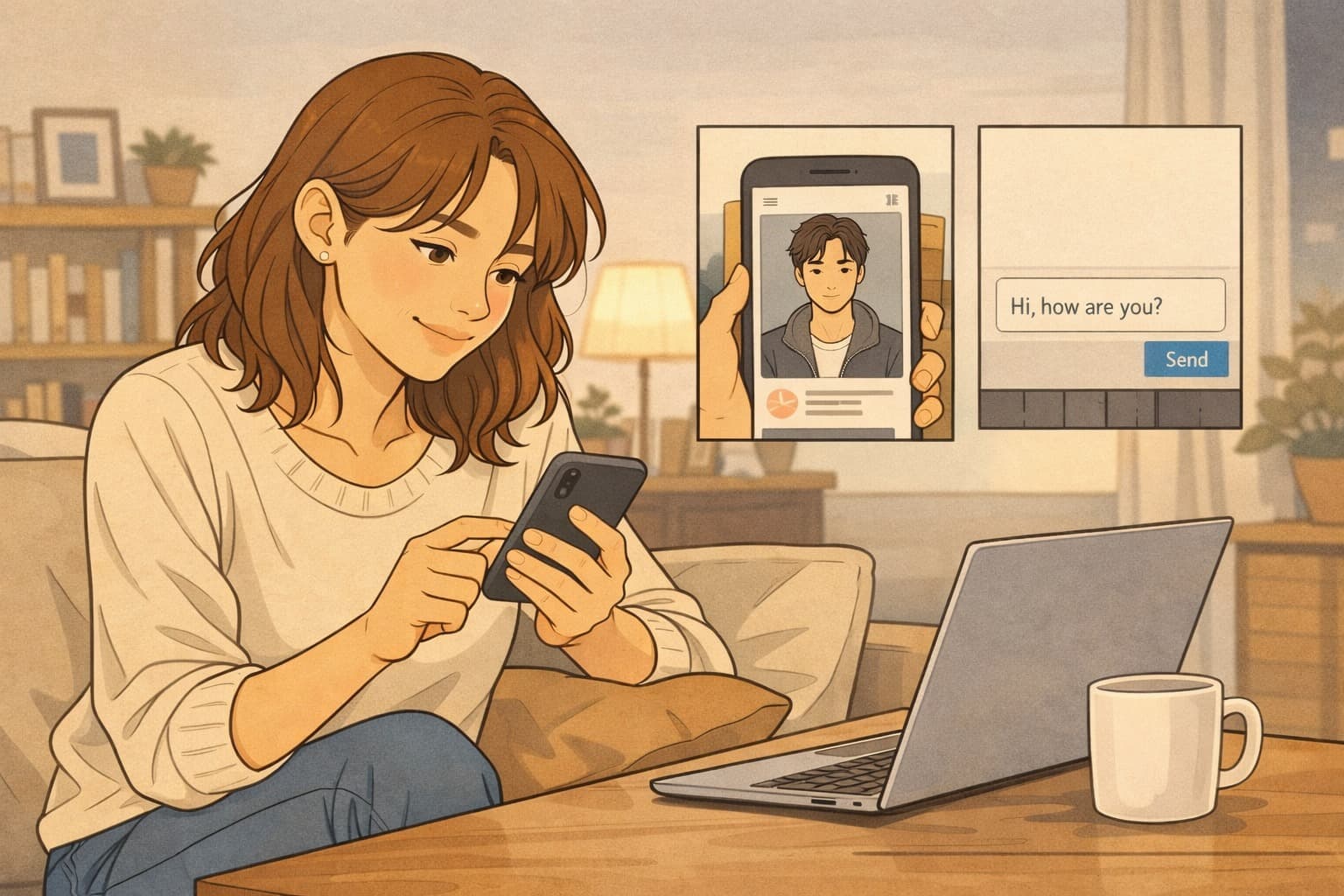
According to Pew Research, online dating is especially common among younger adults. 3 out of 10 adults residing in the USA use online dating apps. It starts with messaging and calls, and mostly relies on digital platforms before meeting in person. Different types of online dating platforms offer the ability to find the best match according to your personality. Profiles can give you a basic sense of a person’s interests, preferences, and intentions before you meet.
The main advantages of online dating are convenience, accessibility, and the ability to meet more people. You can get instant access to a huge community of potentially compatible matches beyond your neighborhoods using different types of online dating platforms. You can filter by life stage, interests, education, values, and dating intentions.
"Dating websites have enormous advantages of scale."
Michael RosenfeldProfessor of sociology at Stanford university and social demographer
Some of the most common benefits of online dating are listed below:
- Connection to a huge community of singles
- Saves time by using algorithms to find the best suitable match
- Matching based on age, interest, and values
- Shy people may feel more comfortable starting with digital conversation
- It allows you to meet people beyond your local area, including other cities and countries
- Builds confidence by audio, video, and text chat before meeting in person
- Niche platforms can match people with specific values, lifestyles, or preferences
Online dating can make it easier to meet potential matches, but there are some disadvantages to online dating. To reduce these risks, pay attention to a few simple rules: avoid profiles with very few photos, be cautious if someone refuses video calls, and do not move conversations to external apps too quickly.
One of these is the risk of fake profiles and other misleading information (including doctored photos). Another common downside is fast, repetitive swiping, which can make people feel disposable. According to the Federal Trade Commission, more than 70 000 people reported romance scams in 2022 and lost a total amount of $1.3 billion.
- Risk of misleading information, fake photos/profiles
- Data theft and risk of privacy breach
- Can lead to an endless search because of unlimited options (having too many options can also reduce satisfaction - people may feel there is always someone better, which makes it harder to commit)
- Digital dating offers quick swiping
- Misunderstandings can escalate more easily when communication happens mostly through text
- Limited features without a paid subscription
- Some users may provide inaccurate or incomplete information
- You may end up talking to someone who is not serious about dating
You might be interested in our article "Top 10 red flags of online dating you should never ignore"
Different types of online dating platforms
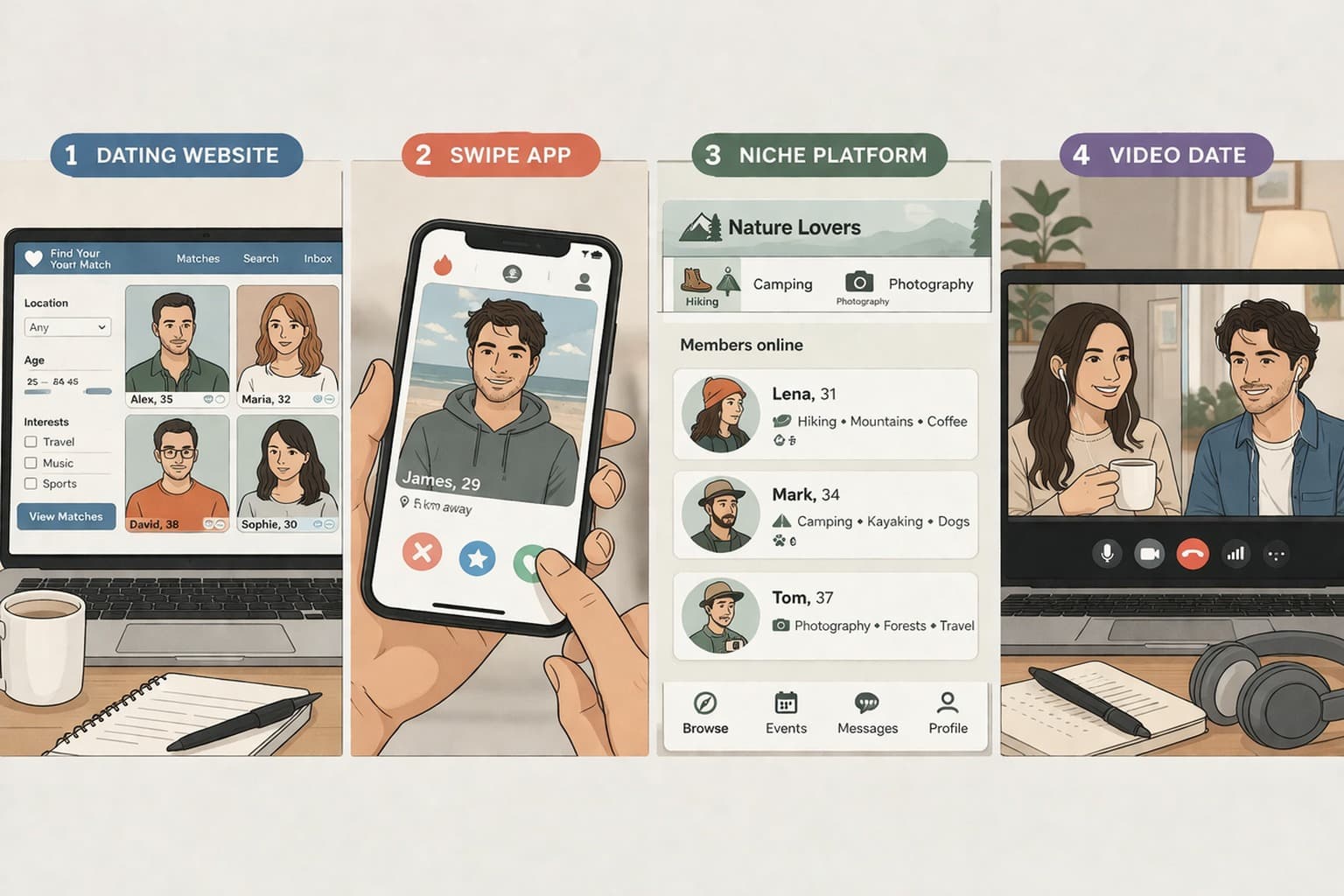
Looking at the main types of dating platforms makes it easier to understand their strengths and limitations. According to Statista, online dating revenue was projected to reach $3.1 billion in 2025. Some of the commonly used dating platforms are listed below with their features and abilities. It is very important to learn about the types of platforms when comparing online dating vs traditional dating.
Dating websites
General dating websites like Meetty, OkCupid, or Match can work well for singles looking for a serious relationship. These websites often offer advanced filters, detailed profiles, and questionnaires designed to improve compatibility. They offer a large user base from around the world, but it can feel overwhelming due to the unlimited number of members. The pros and cons of dating websites solely depend on the person's needs, but these platforms try to offer a structured approach for a perfect match and reduce swiping.
Mobile apps
Numerous dating apps like hinge, bumble, and tinder have made the modern dating process user-friendly and instant with their amazing features. A simple swipe makes it easy to move quickly through potential matches. These apps are especially useful for busy people who want quick, location-based matches. Some people think these apps are promoting casual relationships and superficial judgments, but still, their accessibility and speed are unmatched when we compare both dating approaches.
Niche centered dating services
This type of online dating platform is a perfect choice for people with specific lifestyles, religions, cultural preferences, and interests. This category includes platforms like Christian mingle, EliteSingles, and Jdate. These platforms are built around shared values, identities, or communities, including faith-based and LGBTQ2+ dating. They can reduce mismatches and create a stronger foundation for long-term compatibility. According to a recent study by Michael Rosenfeld, 39% of couples during 2017 met online through digital platforms. The niche-centered platforms mostly have a small user base, but offer accurate matching and increased ability to find the one who perfectly aligns with your values.
Live-streaming and video platforms
Video-based platforms use video features to increase trust and make interactions feel more authentic. These types of online dating platforms include platforms like MeetMe, Tinder, and Zoosklive. The feature of face-to-face interaction minimizes the chances of fake profiling and catfishing in online dating. Compared with text-only interaction, this feature comes closer to meeting in person, which lets you see the other person and get a better sense of them.
Safety, privacy, and authenticity concerns in modern dating

While evaluating digital vs in-person dating, safety and privacy are crucial factors to consider. Modern dating platforms like websites and apps offer convenience and scalability, but they always come with common cons of online dating, like scams, catfishing, and fake profiles.
Users still need to take responsibility for their own safety when meeting in person and need to carefully verify the potential matches. To handle this, many platforms have introduced in-app reporting tools and photo verification. On the other hand, when comparing online vs offline dating, in traditional dating, the partner always comes through known and trusted circles like friends, family, and work colleagues.
Algorithms vs organic encounters
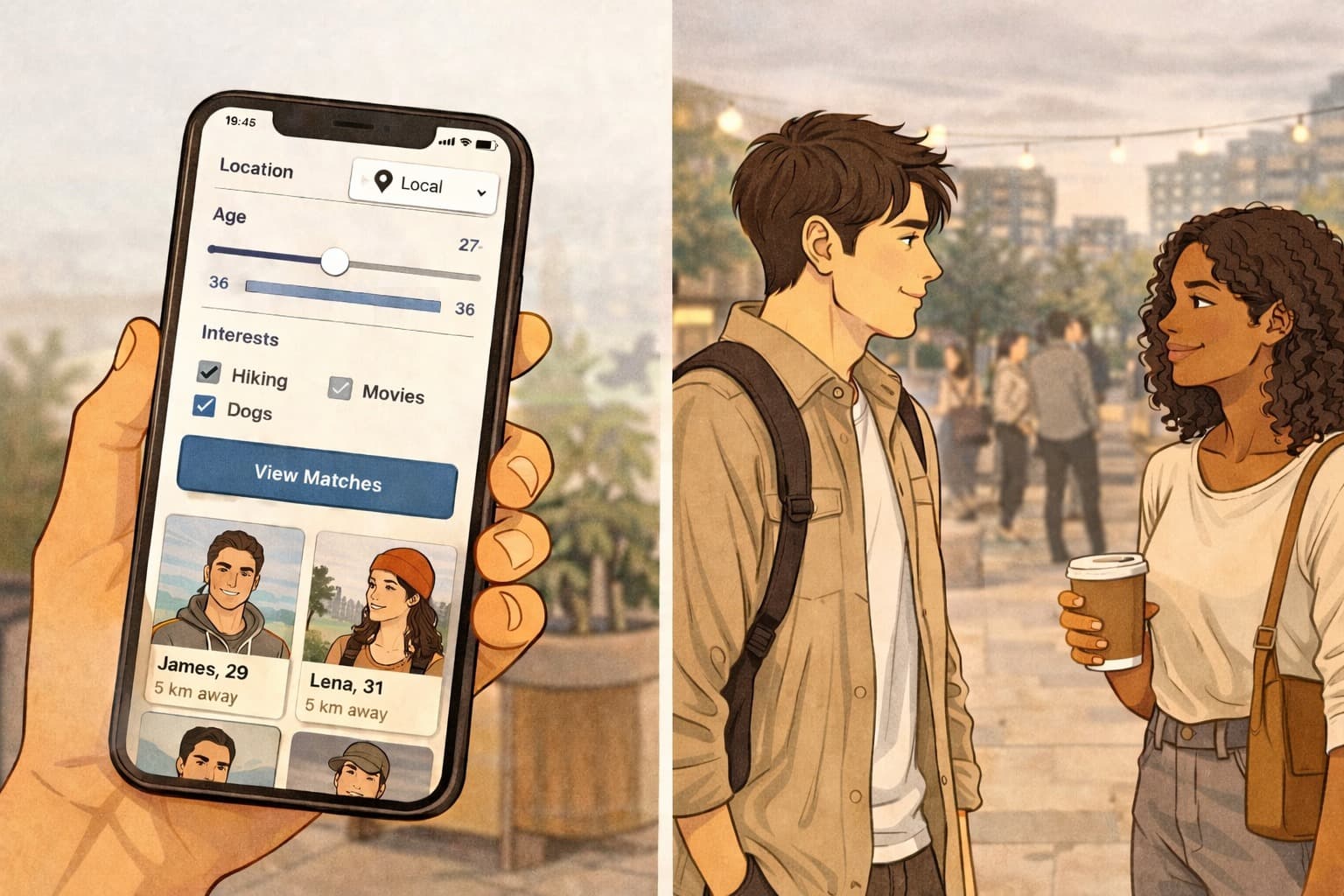
One of the key advantages of online dating is the use of algorithms and filters to narrow down potential matches. These tools help users find more compatible matches based on interests, values, and preferences. When we compare these features between both dating approaches, the reliance on profile curation feels less genuine than traditional dating.
"Those aren’t the things that lead to long term relationship success."
Logan UryBehavioral scientist, dating coach, director of relationship science at Hinge
In real-life encounters, real-time chemistry and natural expressions play an important role in understanding the personality. This contrast of in-person meetings and the pros and cons of dating websites highlight the unique limitations and strengths of both.
Convenience, reach, and time efficiency
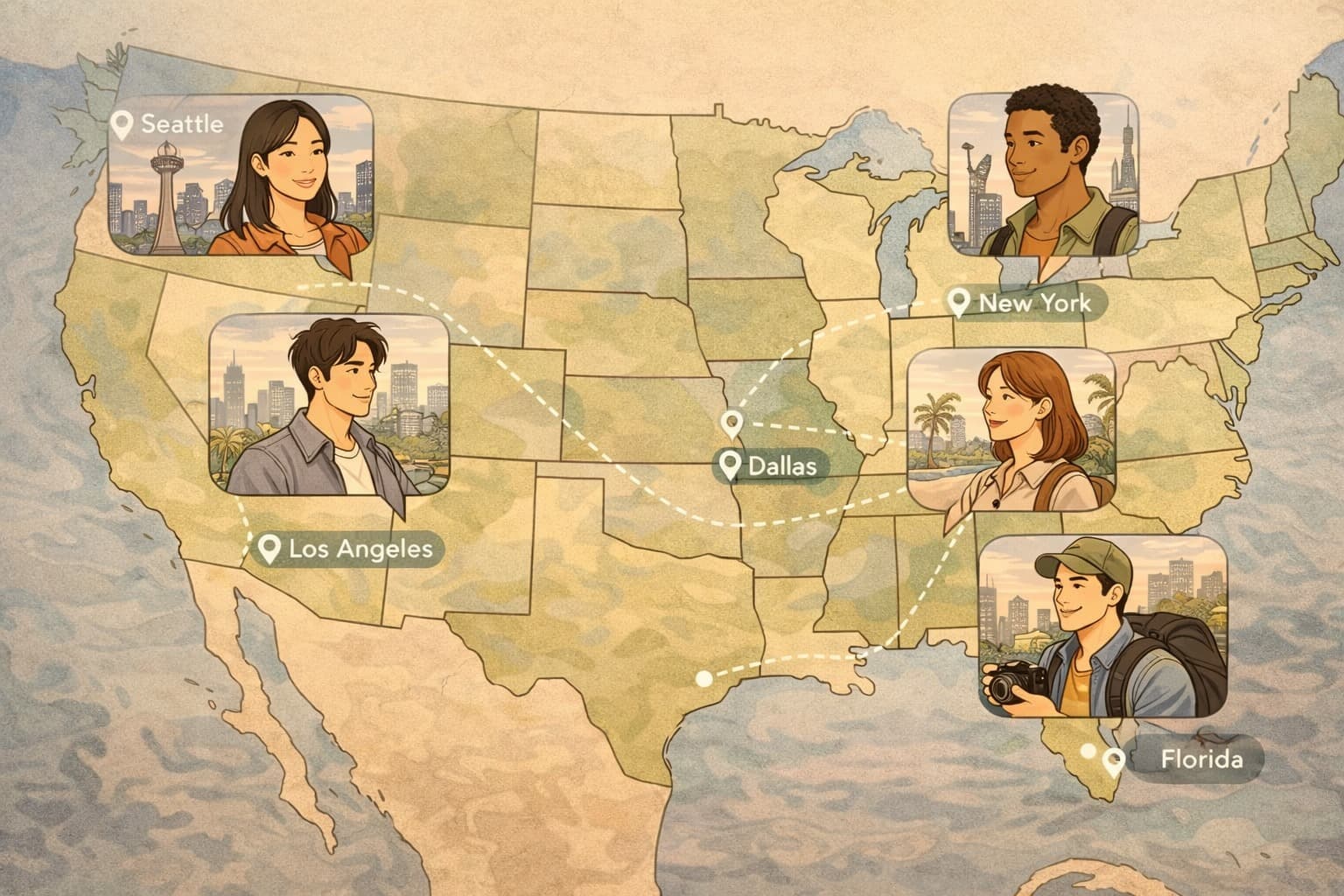
Convenience and time saving are two of the biggest advantages of online dating sites. Online dating lets you connect with potential matches anytime. You can save time and avoid some mismatches by screening profiles and using filters before meeting. The speed and global reach modern dating offers are unmatched benefits of online dating services, but it can lead to more casual interactions if people are not intentional.
Cost, social perception, and cultural acceptance
When comparing online vs offline dating, cost is a vital factor to consider. One of the benefits of online dating sites is that many platforms are free to start, with extra features like read receipts and advanced filters available on paid plans. In the comparison of digital vs in-person courtships, traditional dating often involves upfront costs like transportation, meals, etc.
The broadening user diversity has expanded social acceptance, and the earlier stigma of in-person meetings has declined. But still, many people still value traditional dating because it can feel more natural within shared cultural or religious contexts. It is also worth considering local culture and family expectations, especially if those factors matter to you.
Hybrid approach and tips for choosing
If you are unsure which approach to choose, use this simple guideline:
- Online dating works better if you are busy, new in a city, or prefer starting conversations online
- Traditional dating works better if you value real-life chemistry and feel comfortable meeting people through social circles
- A combination of both often gives the best results
Here are a few tips for combining online and offline dating in a balanced way:
- Try to combine both online and offline dating before your final decision
- Avoid mismatches and cons of dating sites by writing a clear profile bio
- Reduce risk by scheduling an early video call and verifying identity before meeting
- Try to move from chatting to an in-person meeting reasonably early if it feels safe and mutual
- Attend activities like workshops, meetups, and community gatherings for organic encounters
- Maintain balance by taking regular breaks
The choice between online and traditional dating depends on your values, preferences, timing, and comfort level.
"Timing is important. If you’re not ready, you won’t notice a perfect partner, even if he or she is sitting on your lap."
Helen FisherBiological anthropologist, senior research fellow at the kinsey institute
For example, someone who has just moved to a new city will likely benefit from online dating to quickly build connections. In contrast, a person with an active social circle may find traditional dating more natural and effective.
Online dating offers several advantages, including convenience, cost saving, global reach, and filtering. At the same time, it also comes with real drawbacks, including scams, fake identities, and misleading personal information.
Traditional dating can be more time-consuming, but it reduces the chances of scams and catfishing. It is also costly and harder for those who fear in-person meetups. Overall, online dating can be a strong option if you want wider reach, convenience, and more control over filtering potential matches.