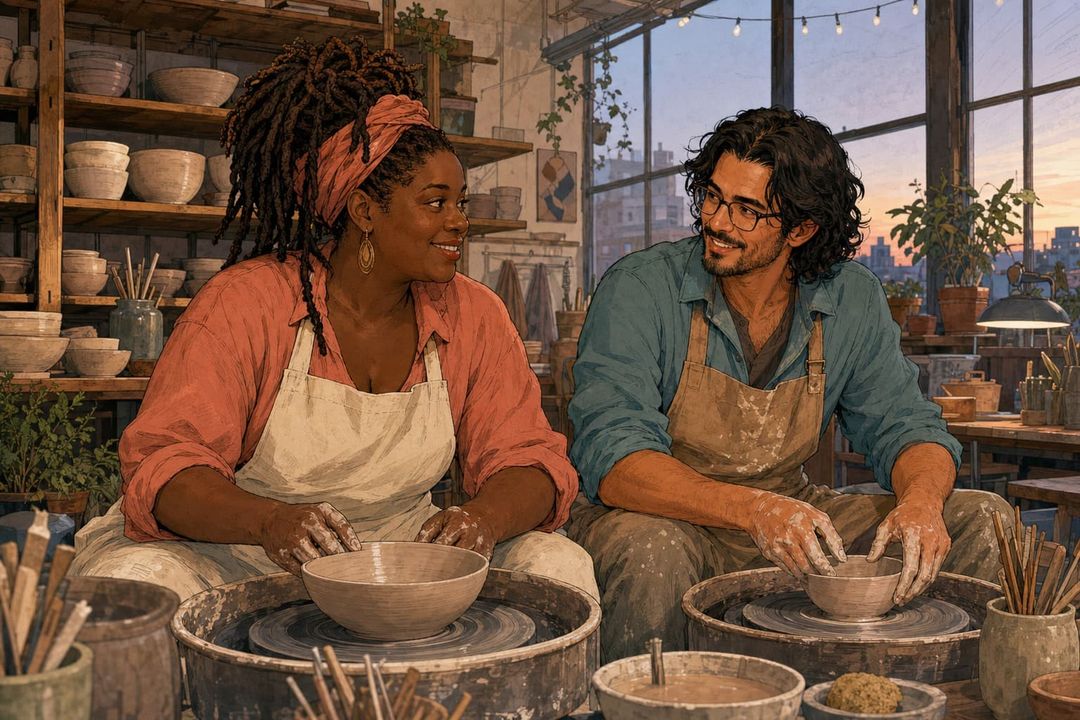


Interracial dating means building a romantic connection with someone whose racial or ethnic background is different from yours. For many couples, that difference is only one part of the relationship. You still need attraction, shared values, trust, respect, and everyday compatibility.
At the same time, race and ethnicity can shape how a couple is seen by relatives, strangers, communities, and sometimes institutions. In the U.S., Pew Research Center reported that 17% of newlyweds in 2015 married someone of a different race or ethnicity, compared with 3% in 1967.
Those numbers show major social change, but they do not mean every interracial couple has an easy experience. Some couples face family hesitation, stereotypes, cultural misunderstandings, fetishization, or pressure to "pick a side." Others find that dating across racial or ethnic backgrounds expands their world in a good way.
The goal is not to treat interracial dating as a problem. It is to understand the places where love, identity, culture, and social pressure can meet.
"These challenges are real and valid. They don’t mean that your relationship is broken."
Shain ChristianRegistered Psychotherapist (Qualifying) and counselling psychology practitioner supporting individuals and couples
Interracial relationships include more than one pairing

An interracial relationship is any romantic relationship where partners identify with different racial or racialized ethnic backgrounds. It can include dating, cohabitation, engagement, marriage, or a long-term partnership.
It is also worth separating interracial and intercultural dating. They often overlap, but they are not identical. Two people may be from different cultures while being seen as the same race. Two people may also be from different racial backgrounds while sharing language, religion, nationality, or many daily habits.
Interracial dating is not only Black-and-white dating. It can include any pairing across racial or ethnic lines, including Asian and Black partners, Latino and white partners, Indigenous and Asian partners, multiracial partners dating monoracial partners, and many other combinations.
Because racial labels are social as well as personal, couples may define their relationship differently depending on country, family history, community, and lived experience. The respectful starting point is simple: let each person describe their own identity.
Historical and legal context still shapes modern dating
For U.S. readers, interracial relationships exist in the shadow of real legal history. Until Loving v. Virginia in 1967, some states still banned interracial marriage. The law has changed, but family beliefs, community norms, and social reactions do not always change at the same pace.
That history can show up in small and large ways:
- relatives who treat the relationship as unusual or political;
- strangers who stare, ask intrusive questions, or assume one partner is not really part of the couple;
- family fears about how future children will be treated;
- pressure from either side to prove loyalty to one racial or cultural group.
You do not need to become a historian before dating someone. But you do need enough awareness to understand why certain comments may hurt your partner more than you expected. A joke, assumption, or "I don't see race" comment can land differently when your partner has spent years dealing with racialized assumptions.
If you are the partner with more social privilege in a given context, listen before explaining. If your partner tells you a situation felt racialized, take it seriously even if you did not notice it at first.
Cultural differences can become strengths with honest communication
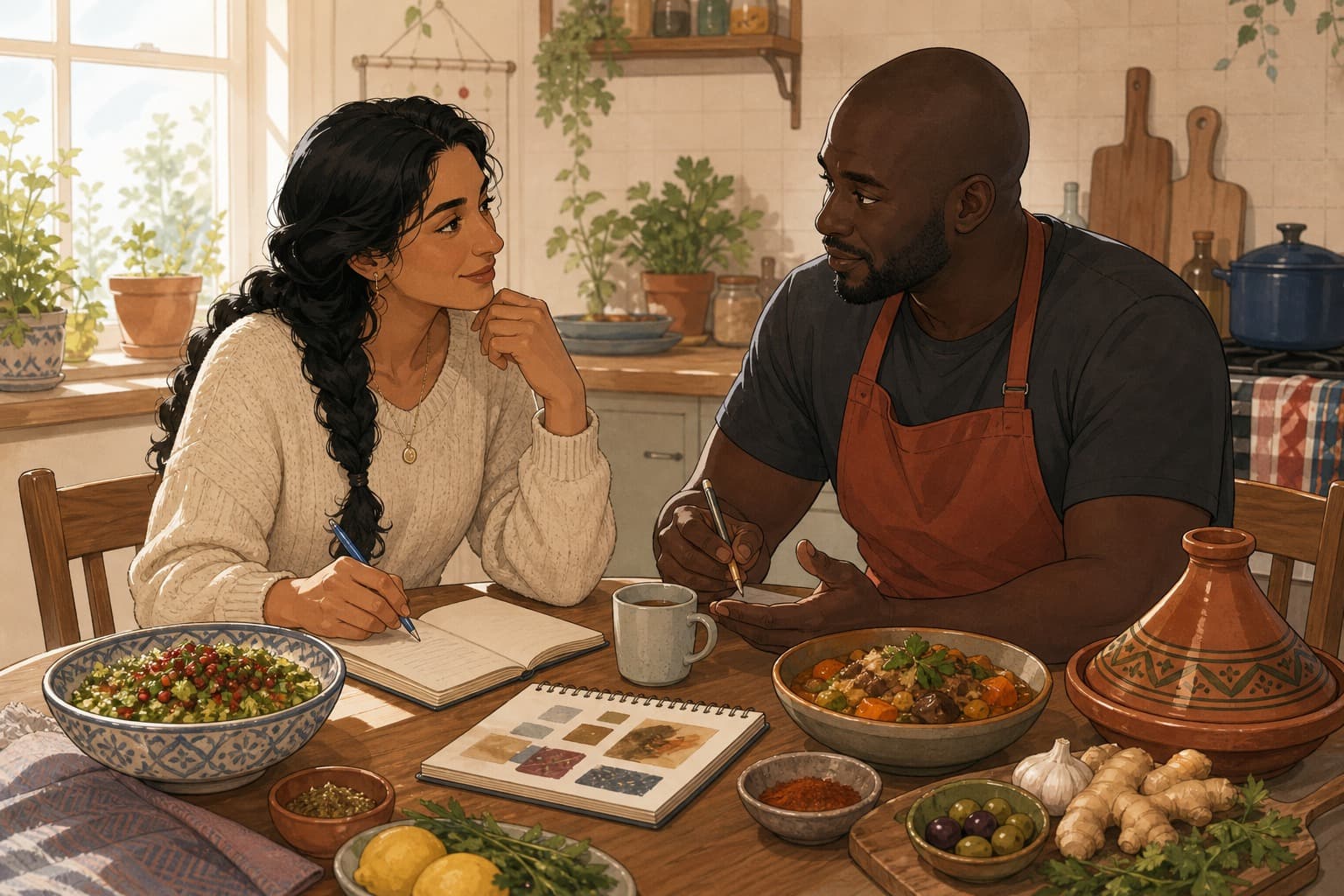
Cultural differences can make a relationship richer. You may learn new food traditions, holidays, family rituals, languages, humor, faith practices, music, or ways of showing care. But cultural difference can also create friction if both people assume their own background is the default.
Common areas of difference include:
- how often extended family is involved;
- whether holidays are private, religious, communal, or family-centered;
- expectations around money, saving, gifts, and financial support;
- views on public affection, gender roles, dating pace, and commitment;
- parenting expectations and discipline styles;
- food, hospitality, home habits, and religious practice.
The practical move is not to solve every difference on the first date. Start with curiosity. Ask what matters most to your partner and explain what matters to you.
"It is important to listen and express your true feelings about race and cultural differences."
Reshawna ChapplePhD, LCSW, culturally responsive clinician and Associate Professor of Social Work at the University of Central Florida
For example, one partner may see frequent family visits as love and loyalty, while the other may experience them as pressure. One partner may expect shoes off indoors, while the other has never thought about it. One family may treat holiday attendance as non-negotiable, while another sees holidays as flexible.
A useful early conversation might sound like this: "I want to understand which traditions are meaningful to you, not just copy them on the surface. Which holidays, family habits, or expectations would you want a serious partner to respect?"
Hybrid traditions can help. A couple might celebrate Christmas and Lunar New Year, cook food from both families, rotate holidays, learn key phrases in each other's languages, or create a new ritual that belongs to the relationship itself.
For broader early-relationship basics, guide to dating rules that actually make dating better may help with consent, boundaries, pacing, and expectations.
Stereotypes and microaggressions need a team response
Interracial couples may hear comments that sound small to outsiders but feel exhausting over time:
- "What are your kids going to look like?"
- "So which culture wins?"
- "You must have a type."
- "Your family must be so progressive."
- "Is your partner the nanny?"
- "Where are they really from?"
Some comments are clumsy curiosity. Others are stereotypes, fetishization, or racism. Either way, the couple needs a shared plan.
Do not put all the emotional labor on the partner who is most directly targeted. If someone makes a racialized comment about your partner, step in calmly. You can say, "That's not how we talk about our relationship," or "Please don't make assumptions about their background."
Humor can sometimes defuse awkwardness, but it should not become a way to swallow repeated disrespect. A good boundary is short, specific, and repeatable:
- "We are not discussing our relationship that way."
- "That question feels too personal."
- "Please don't turn my partner's race into a joke."
- "If you want to know something about our cultures, ask respectfully."
If the pressure becomes persistent, it is reasonable to limit contact, leave an event, or stop explaining. Boundaries are not punishment. They protect the relationship from repeated harm.
Family and friend acceptance may take time
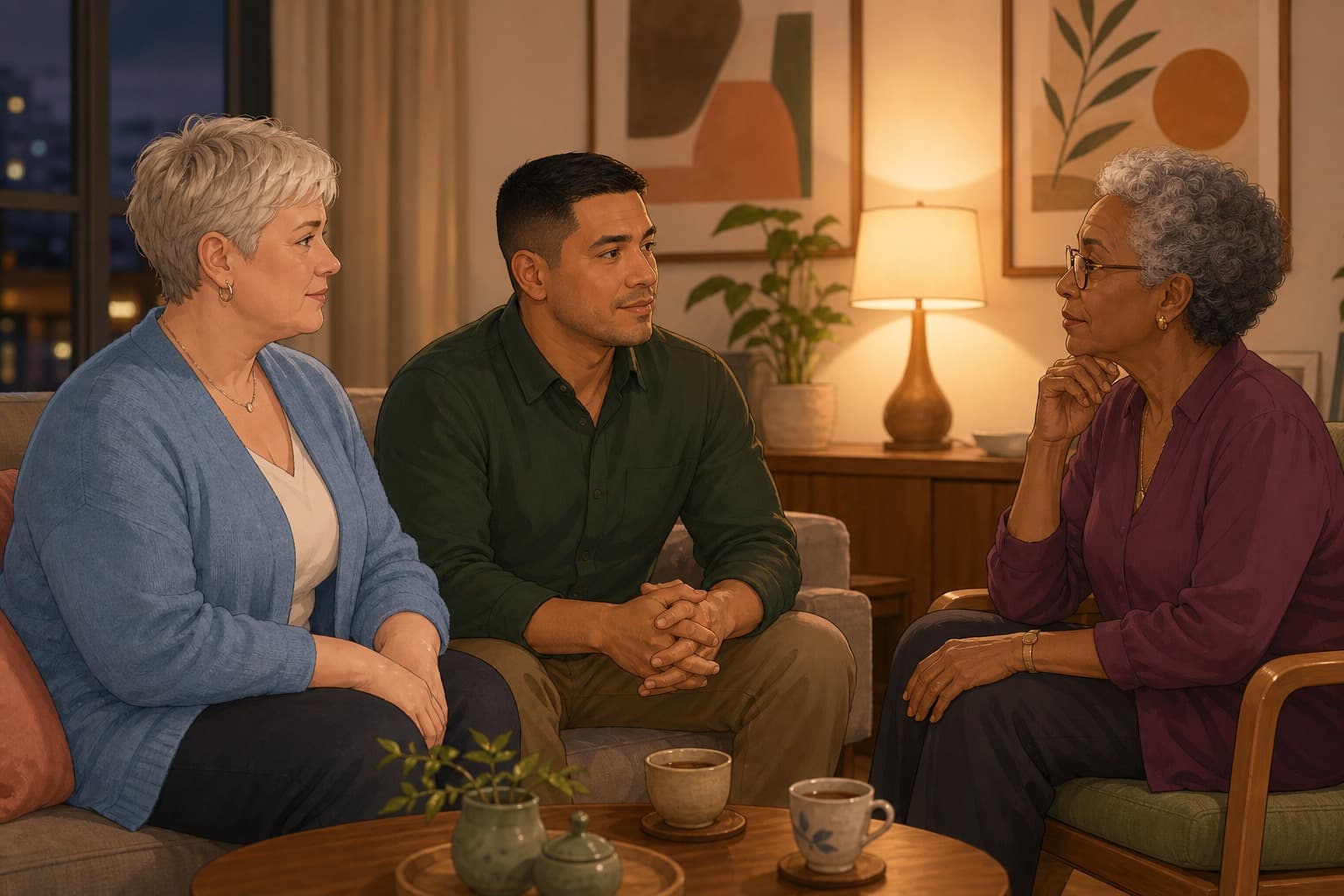
Family resistance can be one of the hardest parts of interracial dating. Some relatives react from prejudice. Others react from fear, unfamiliarity, religious beliefs, cultural expectations, or anxiety about how the couple will be treated by society.
You can give people a chance to learn, but you do not have to tolerate disrespect indefinitely.
Start with simple, humanizing conversations. Tell family what you value about your partner: their kindness, reliability, humor, ambition, patience, or care for you. Invite relatives to know the person rather than debate the concept of interracial dating.
Then watch behavior. Are they making an effort? Are they using your partner's name? Are they asking respectful questions? Are they correcting themselves when they make mistakes?
If the answer is yes, patience may help. If the answer is no, boundaries matter. You might say:
- "I want you in my life, but I will not bring my partner into conversations where they are disrespected."
- "You do not have to understand everything immediately, but you do need to be civil."
- "If this continues, we will leave family events earlier or come less often."
Respect your partner's read on their own family. They know the history, personalities, and risks better than you do. Your job is to support, not take over.
Communication needs extra care around language and humor
Language, accent, humor, and sensitive topics can become surprisingly loaded in interracial or intercultural dating. A joke that feels harmless in one family may sound insulting in another. A direct tone may feel honest to one person and harsh to another. Silence may mean comfort, respect, discomfort, or disagreement depending on the context.
Good communication starts with asking instead of assuming. Try:
- "How does your family usually handle conflict?"
- "Are there jokes or topics you would rather I avoid?"
- "Would it feel meaningful if I learned some phrases in your language?"
- "When I meet your relatives, is there anything I should know?"
- "If I say something clumsy, how would you like me to respond?"
If you make a mistake, do not turn the apology into a debate. A better response is: "Thank you for telling me. I can see why that landed badly. I will say it differently next time."
Dating already works better when questions are thoughtful and not invasive. For conversation ideas that build connection without turning a date into an interview, see our guide to deep dating questions.
Future children may need room for a full identity

Not every interracial couple wants children, but couples who do often think about identity early. Future children may be asked to explain "what they are," choose one box, represent one side of the family, or deal with assumptions based on appearance.
Parents cannot control every outside reaction. They can shape the home environment.
That means:
- speaking positively about both sides of the child's background;
- exposing the child to books, names, languages, food, music, and family stories from both sides;
- avoiding pressure to "pick" one identity for adult comfort;
- preparing the child for questions without making identity feel like a burden;
- correcting relatives who erase one side of the child's heritage.
A child may identify differently at different ages. That does not mean parents failed. It often means identity is developing in conversation with family, peers, society, and personal experience.
Benefits of dating outside your race can be real
Interracial dating can expand a person's world. It can introduce new traditions, communities, histories, foods, values, and perspectives. It can also help both partners notice assumptions they did not know they carried.
The benefits are strongest when the relationship is mutual, not extractive. Your partner is not a cultural tour guide, a political education project, or proof that you are open-minded. They are a person.
Healthy growth may look like:
- becoming more aware of how your partner moves through the world;
- learning when to ask, listen, and step back;
- building shared traditions rather than forcing one background to dominate;
- becoming more confident talking about race without defensiveness;
- understanding that love does not erase social context.
This kind of growth can deepen intimacy. Many couples become closer because they learn how to protect each other, translate family expectations, and talk honestly about things other couples may avoid.
Common challenges include colorism, fetishization, and isolation

Some interracial couples face challenges that are not only about "different cultures."
Colorism can affect how partners are treated inside and outside their communities. Fetishization can make one partner feel desired for a stereotype rather than known as a full person. Friends or relatives may pressure someone to date "within the community." Strangers may treat one partner as a trophy, rebel, caregiver, visa path, or political statement.
These patterns can be painful because they reduce the relationship to race while ignoring the actual bond.
A strong couple response starts with naming the pattern:
- "That comment made me feel like you saw me as an idea, not as your partner."
- "When your friend joked that you have a type, I felt reduced to my race."
- "I need you to notice when your family treats me as an outsider."
If a partner dismisses these concerns every time, that becomes a relationship issue, not only a social issue. Love requires listening when something affects your partner's dignity.
For online dating, safety and respect also matter. If a match fixates on race, asks exoticizing questions, or pushes intimacy too fast, step back.
Our article on online dating scams is focused on fraud, but its broader safety principle still applies: slow down when someone creates pressure, secrecy, or discomfort.
Practical Habits Help Interracial Couples Thrive
Interracial couples do not need a perfect script. They need repeatable habits that protect the relationship.
Talk about race before conflict forces the topic
Do not wait until a family dinner goes badly. Ask how each of you experiences race, culture, and belonging. Talk about what support looks like in public, with relatives, online, and in private.
Build a shared boundary plan
Decide what you will do if someone makes a racist joke, asks intrusive questions, or disrespects the relationship. A plan reduces panic in the moment.
Keep learning without making your partner your teacher
Read, listen, and learn on your own too. Your partner can share personal experience, but they should not have to explain every historical or cultural issue from scratch.
Protect private time from outside pressure
If family opinions become loud, return to the actual relationship. Are you kind to each other? Do you communicate well? Do your values align? Do you feel respected?
Seek support when needed
Support can come from trusted friends, other interracial couples, community spaces, or a culturally responsive therapist. Therapy is not a sign the relationship is failing. It can help couples talk through family pressure, identity questions, conflict patterns, and hurtful experiences with more care.
If you are still early in dating and want to keep the first meetings relaxed, first date tips can help you focus on presence, safety, and conversation rather than performance.