
There is no single appropriate age for dating. A group outing at 13 and a one-on-one date at 16 involve different decisions. Consider whether your teen wants to date, can respect boundaries, and has a safe way to ask for help.
Age 16 is a familiar starting point for some families, but it is not a guarantee of emotional readiness. Children's Health explains that timing also depends on maturity and family values. Starting later is a valid choice, too.
The right age depends on what dating means
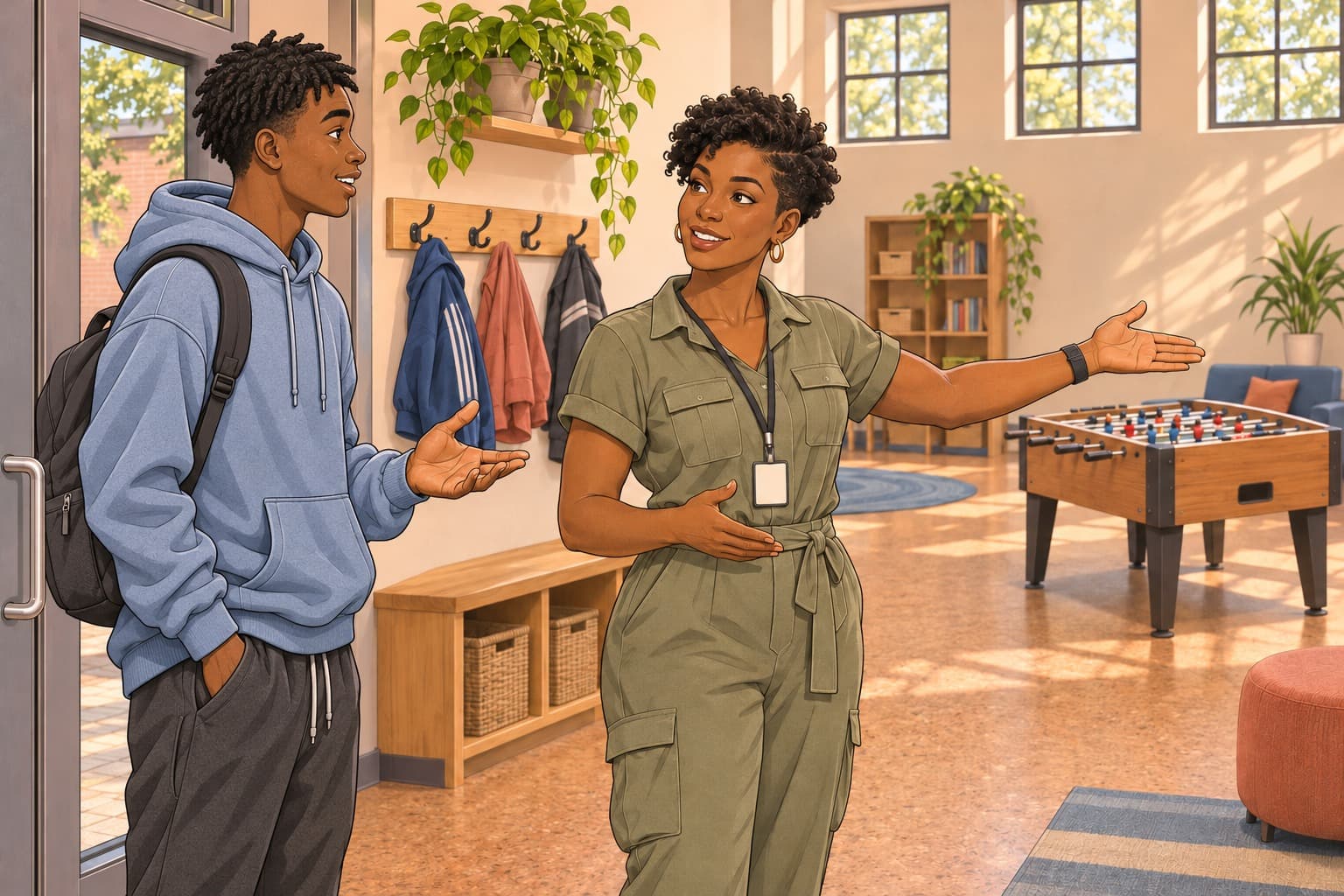
Before deciding on an age, ask what your teen is proposing. Spending time with a crush among friends, going out alone together, and becoming a couple are different steps. None automatically means agreeing to sexual activity.
Ask, "When you say dating, what would you like to do together?" A specific plan gives you something useful to discuss. The difference between dating and a relationship can also help parents discuss labels without assuming that both teens understand them alike.
If you set an age limit, connect it to specific responsibilities and explain your reasoning.
"With teenagers, if a rule is being laid out, they want to know the why behind it."
Tori CordianoLicensed clinical psychologist working with children, adolescents, young adults, and families.
Source: Teenage dating advice for parents: Q&A with a parenting expert
Family, cultural, and religious expectations
Families differ in how they approach dating, supervision, and commitment. Avoid assuming that everyone within a religion, country, or community follows the same rules. Ask what matters to the people involved.
A parent might say, "In our family, we want to meet the person and agree on transport before a date." Explain which expectations concern safety and which reflect your family's values. Give your teen room to ask questions, including when a rule can be reviewed.
Local laws and school rules need separate checks

Permission to go on a date does not settle what sexual activity is lawful. Check official guidance where you live, including rules about age, people in authority such as teachers or coaches, exploitation, and sexual images. School conduct rules and local curfews are separate checks.
Do not assume a small age gap creates an automatic legal exception. For example, Canada's Department of Justice describes close-in-age exceptions with specific conditions, including restrictions involving trust, authority, dependency, or exploitation. Those conditions are Canadian guidance, not a rule to apply elsewhere. For a particular situation, seek qualified local legal advice.
Readiness shows in everyday choices
Look for practical skills rather than expecting a teen to be perfectly confident or never feel upset. Can they:
- Accept a refusal without repeated requests, insults, or retaliation?
- State a preference and recognize when someone is pressuring them?
- Follow an agreed plan and contact a safe adult if it changes?
- Leave room for friends, school, sleep, and interests outside the relationship?
These are conversation starters, not a test that guarantees safety. Feeling awkward when talking to a parent does not, by itself, prove a teen is unready.
Try a situation: "What would you do if your date wanted to go somewhere we hadn't agreed on?" Help your teen practice a response such as, "I'm staying here, and my ride is coming." Having feelings is different from being ready for every next step.
Health and safety come before a first date

Make a concrete plan: where the teens will be, who will be there, how they will get home, and when they will check in. Agree that your teen can call for a ride if uncomfortable. Prioritize getting them home safely; discuss any broken agreement afterward.
Consent needs a real choice: either person can decline, pause, or change their mind.
"Once you know what you want and what your partner wants, then you can figure out where you enthusiastically agree."
Lisa DamourClinical psychologist and author of The Emotional Lives of Teenagers.
Source: Talking with teens about the physical side of romance
Talk about pressure before it happens. Gifts, paying for an outing, or being someone's partner do not create an obligation to accept touching or sexual activity. Dating rules about consent and boundaries can give parents additional language for that conversation. Questions about contraception, infections, or other sexual-health concerns belong with a qualified healthcare professional as well as age-appropriate education.
Take threats, unwanted touching, humiliation, and attempts to isolate a teen seriously. CDC's summary of its 2021 survey reports that, among U.S. high school students who had dated in the previous 12 months, about 1 in 12 experienced physical dating violence and about 1 in 10 experienced sexual dating violence. These figures do not establish a safe age to begin dating.
If a teen is afraid of a partner, involve a safe adult and a local specialist support service. Avoid arranging a private confrontation. In immediate danger, contact local emergency services.
Age groups offer starting points for discussion
The following suggestions are ways to plan support, not milestones every young person must reach. Raising Children Network notes that interest in relationships starts at different times, including the late teens or early adulthood.
Preteens age 10-12
Keep the focus on friendships, shared activities, and learning respect. Take a crush seriously without turning it into a requirement to have a partner. If a child says they are dating, ask what that means to them before reacting to the label.
Early teens age 13-14
Consider supervised group activities with familiar peers if your teen wants to spend time with someone they like. Confirm the actual venue, adults present, and ride home. Calling an outing a group date does not remove the need for a plan.
Mid-to-late teens age 15-17
Assess one-on-one plans individually. A short daytime outing in a familiar public place may be a manageable next step when both teens want it and practical support is in place. Parents can use these first-date tips to discuss activities and conversation, adapting them to the teen's age and circumstances.
Young adults age 18 and over
An eighteenth birthday does not settle readiness, relationship expectations, or every local legal requirement. Support can continue while respecting a young adult's decisions and privacy. There is no need to begin dating because friends already have partners.
Average starting ages are not a deadline

An average is only useful when you know what a survey counted as dating, whom it surveyed, and when. A first crush, a group outing, and an established relationship cannot be treated as the same event.
In a 2015 Pew Research Center survey, 44% of U.S. teens ages 15-17 had some romantic relationship experience, compared with 20% of those ages 13-14. Those historical percentages describe experience, not an average starting age, a current trend, or a recommendation. They do not tell an individual teen when to start.
Parents and guardians can keep communication open
Ask what your teen enjoys about the person and what they want help with. Make room for an awkward answer, or no answer yet.
"Do a lot more listening than talking."
Barbara GreenbergClinical psychologist working with teens and families, licensed in Connecticut and New York.
Source: Guidelines for raising teens
If they do not feel able to talk to you, help them identify another safe adult, such as a school counselor or healthcare professional.
Discuss expectations about dates, messaging, homework, and time with friends before conflict builds. Agree on a plan together, then revisit it after your teen has tried it.
Show interest without asking for every private detail. If something concerns you, describe the behavior: "You said they get angry when you see your friends. How does that feel?" This gives your teen something concrete to consider without having to defend the whole relationship.
Age gaps require attention to unequal power

There is no universal two-year gap that makes a teen relationship safe or lawful. Consider differences in authority, independence, money, transport, and experience. Can either person disagree or leave without fear?
If an adult asks a minor to keep a relationship or sexual contact secret, involve a safe adult or safeguarding professional promptly. The same applies to pressure from someone with authority, such as a coach or teacher. Keep the focus on the conduct and the teen's safety rather than blaming the teen for becoming involved.
Dating needs room alongside school and friends
Plan around existing commitments: homework, sleep, activities, and time with other people. For example, agree to finish a call before bedtime rather than expecting instant replies throughout the night. A partner should be able to hear, "I have practice, so I'll reply afterward."
If grades, sleep, or friendships change, ask what is happening before deciding that dating caused it. Adjust the schedule where useful, and look for pressure or fear that needs more support.
For parents considering pace, a first date and a commitment involve different decisions; neither needs to follow a friend's timeline.
Online communication needs clear privacy boundaries

Messaging someone from school is different from meeting an unknown person through an adult dating app. Underage teens should not use adult dating apps or misrepresent their age. Meetty's terms require users to be at least 18. Check the rules of any other service separately, including local restrictions.
A partner should not demand passwords or constant access to a teen's location.
"Remind them they can have a strong relationship even if they choose not to share whereabouts and personal details."
Preeti SandhuPediatric psychologist at Connecticut Children's.
Agree on privacy settings and avoid posting school routines, addresses, or live locations publicly. Teens should not send sexual images or agree to meet an online-only contact alone. Bring a safe adult into any proposed meeting plan.
If someone threatens to share an intimate image, the teen deserves help rather than blame. Do not pay a blackmailer or send more images. With a safe adult, preserve account details and threats without forwarding sexual images, then report the abuse and stop contact. Australia's eSafety guidance on image threats explains protective steps; use the appropriate reporting service in your country.