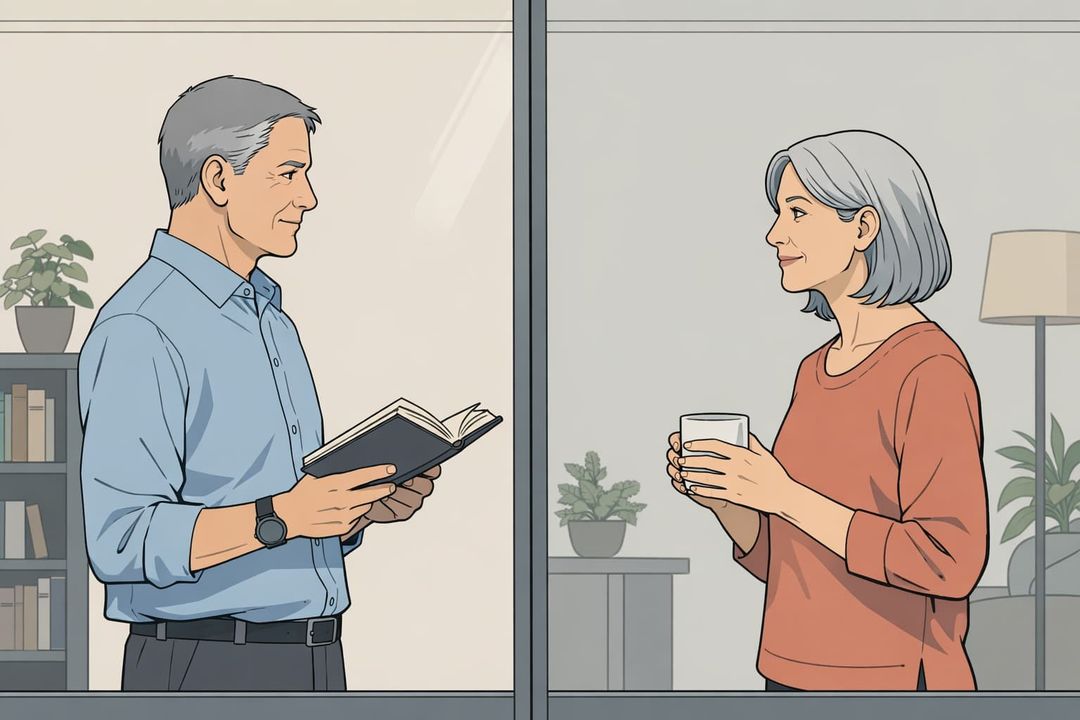


An age gap can attract attention long before two people have had a chance to understand each other. Friends may have opinions, strangers may make assumptions, and the couple may start wondering whether a number says more about the relationship than it really does.
It does not. Age can shape a relationship, especially when partners are at different life stages or have unequal access to money, housing, or professional influence. But it is only one part of the picture. A healthy relationship is built through consent, autonomy, respect, and honest choices.
"Age gap relationships are not inherently problematic nor are they destined to fail."
Carolina PatakyLicensed marriage & family therapist, clinical sexologist, certified sex therapist
What an age gap in dating means

An age-gap relationship is simply one in which partners are a noticeable number of years apart. There is no universal number that makes a relationship healthy or unhealthy. A ten-year difference may feel minor between two established adults and much more significant when one person is just starting adult life.
The useful question is not "Is this age gap acceptable?" Ask whether both partners have comparable freedom to make decisions and whether their day-to-day lives can fit together. A 24-year-old who is financially independent and clear about their goals may have a very different experience from a 24-year-old who depends on an older partner for housing, work, or social support.
The popular "half-your-age-plus-seven" formula is a social rule of thumb, not research or law. It can start a conversation, but it cannot assess consent, compatibility, or power in a real relationship.
Legal consent comes before social approval
This article concerns consenting adults. If either person is below the local age of consent, or if one person has authority over the other as a teacher, coach, supervisor, or caregiver, do not rely on online advice. Laws vary by country, state, and circumstance, and rules may be stricter where trust, dependency, or exploitation is involved. Check the law where you live or speak with a qualified local adviser.
Legal permission is also not the whole standard for a healthy relationship. Consent should be voluntary, informed, and ongoing. Pressure, fear of consequences, or dependence can make it harder for someone to say no even when both people are adults.
For a practical introduction to consent and boundaries, read guide to dating rules that actually make dating better.
Life-stage alignment matters more than a single number

Partners do not need identical careers, hobbies, or timelines. They do need a realistic understanding of where their lives are heading. Talk early about the issues that will affect both of you:
- whether you want a casual connection, a committed relationship, marriage, or children;
- where each person wants to live and how flexible work or study plans are;
- money, debt, savings, and how shared expenses would be handled;
- health, caregiving, retirement, and family responsibilities when those topics are relevant.
For example, one partner may be happy to move slowly and focus on graduate school, while the other hopes to start a family soon. Neither position is wrong. The problem begins when one person minimizes the difference or expects the other to change without a real conversation.
A conversation that creates clarity
Try direct language: "I like where this is going. I also want to be honest that I do not see myself moving in together for at least two years. What timeline feels right to you?"
That gives both people useful information. It is kinder than avoiding the topic until the mismatch becomes painful.
If you are still learning how to name your expectations, our article on casual dating, boundaries, and red flags offers a helpful starting point.
Power differences deserve open discussion
An age difference can overlap with other differences: income, seniority at work, housing, immigration status, parenting experience, or social confidence. None automatically makes the relationship exploitative. They do make regular check-ins worthwhile.
"Power dynamics are not inherently exploitative. Power is fluid and context-dependent."
David W. WahlSocial psychologist and sex researcher
Look for practical signs of equality. Can both people disagree safely? Does each person keep friends, private time, and independent goals? Are major decisions made together? Can the less financially secure partner say no to a trip, purchase, or move without fearing that support will disappear?
Avoid dating arrangements where one partner supervises, grades, treats, coaches, or directly manages the other. The professional power itself can compromise free choice and may violate workplace or institutional rules.
Financial support needs clear boundaries
Paying for dinner or giving a thoughtful gift is ordinary dating behavior. A pattern in which one person controls access to housing, transport, bank accounts, or work opportunities is different. If partners decide to share costs unequally, agree on the terms while both feel unpressured. Each person should retain access to money, documents, communication, and a trusted support network.
Compatibility grows through habits, not matching birth years

Shared values and respectful habits often tell you more than whether you grew up with the same music or technology. Notice how you handle frustration, repair after an argument, and make room for each other's interests. Generational differences can be enjoyable when neither partner treats their own experience as the only correct one.
One Australian study of married couples found that partners with larger age differences reported changes in marital satisfaction over time relative to similarly aged couples. It does not show that an age gap causes a relationship to fail, and it cannot predict an individual couple's future. It does support a practical point: couples benefit from revisiting expectations as life circumstances change.
Ask yourselves periodically: Are our plans still compatible? Has money, work, health, or family care changed what either of us needs? Are we both adapting, or is one person doing all the adapting?
External reactions call for boundaries and reflection
Comments from friends or family can feel intrusive. You do not owe every curious person a full explanation. A simple response such as "We have talked this through and prefer to keep the details private" can end an unwanted discussion.
Still, do not dismiss every concern automatically. Trusted people may notice isolation, pressure, fear, or a rapid loss of independence that is difficult to see from inside a relationship. Listen to the specific behavior they describe, then decide for yourself. "I do not like the age gap" is different from "You have stopped seeing friends because they get angry when you go out."
If online dating is part of your story, keep the usual safety basics in place regardless of age: meet in public at first, tell a friend your plan, control your transportation, and do not send money to someone you have not verified.
Our guides to starting dating safely and online dating scams explain these steps in more detail.
Warning signs point to behavior, not the age gap itself

Age alone is not a red flag. These behaviors are worth taking seriously in any relationship:
- pressure to commit, move in, have sex, or make a major financial decision before you are ready;
- isolation from friends, family, study, work, or interests;
- control of money, transport, passwords, documents, or access to healthcare;
- insults disguised as "experience," such as telling you that you are too immature to know what you want;
- secrecy about a relationship that began when the younger person was a minor, or that depends on a professional power imbalance.
If you feel afraid to disagree or leave, reach out to someone you trust or a local support service. A relationship should make room for your choices, not shrink them.
Readers dating later in life can also explore guide to red flags when dating in your 60s.
A healthy age-gap relationship leaves room for both people to grow
The strongest answer to questions about an age gap is not a defense of the number. It is a relationship in which both people can speak freely, make decisions without coercion, maintain independent lives, and work toward compatible goals.
Keep returning to the conversations that matter: What do we want now? What will change if work, family, health, or money changes? Do we both feel heard? When the answers are honest, an age difference becomes one part of the relationship rather than its entire story.