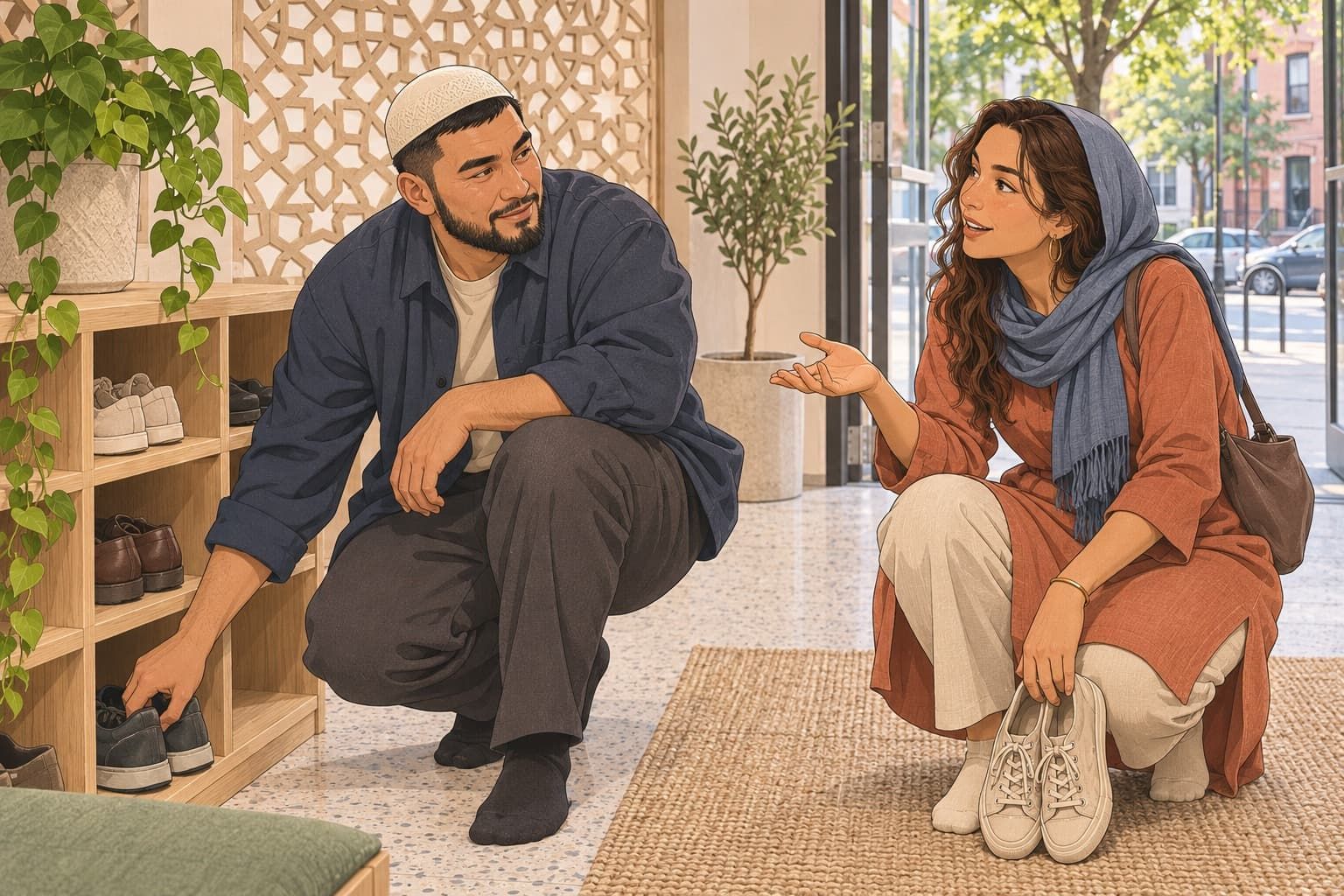
Dating a Muslim man starts with getting to know how he lives his faith, what he wants from a relationship, and whether your expectations fit. Islam may influence his approach to commitment, physical intimacy, family involvement, and everyday routines. His religious identity alone will not tell you what kind of partner he will be.
You do not need to anticipate every difference before a first meeting. You do need room to ask questions, explain your own beliefs, and make decisions freely. The conversations below can help you understand what dating this particular person would mean for both of you.
His own beliefs shape the relationship

Muslim identity, religious observance, and family culture are related, but they are not interchangeable. Two Muslim men may have different expectations about dating, marriage, food, clothing, or social life. Sharing a religion does not mean sharing an ethnicity or nationality, either.
Start with his personal practice rather than a set of assumptions about Muslim men.
"Everyone lives out their faith, or lack thereof, in different ways."
Genesis GamesLicensed mental health counselor and couples therapist, with Level 3 Gottman Method training.
You might ask, "What does being Muslim mean in your everyday life?" Give him space to describe both what matters to him and what he is still working out. If you are Muslim too, do not assume that you follow the same practices or interpret every issue alike.
Culture can matter separately. A preference for living near parents, speaking a particular language at home, or following a wedding custom may come from family experience. Ask how he understands the difference instead of treating every preference as a religious requirement. Guidance on navigating cultural differences in a relationship may help where your experiences overlap, while remembering that interfaith and interracial relationships are different things.
Intentions and boundaries need an early conversation
Clarify what he means by getting to know someone before assuming you want the same kind of relationship. He may be seeking a spouse, considering a relationship without a fixed timeline, or deciding whether dating fits his beliefs at all. Neither an app match nor frequent messages settle that question.
Ask directly, "Are you getting to know someone with marriage in mind, and what would that process look like for you?" Then explain what you are looking for. You can take marriage seriously while needing time to assess compatibility. A conversation about the difference between dating and a relationship can also clarify whether either person assumes exclusivity.
Physical boundaries belong to both people
Islamic teachings prohibit sexual activity outside marriage; the Quran's warning against unlawful sex is part of that religious context. Ask what boundaries he follows around touch, kissing, private meetings, and sexual intimacy. Religious teaching does not tell you exactly how an individual behaves.
If he prefers public meetings or having a trusted person nearby, discuss a format that feels comfortable to both of you. You can decline a proposed arrangement. Your own boundaries remain valid whether they come from faith, personal preference, or simply not wanting something.
A boundary describes what you will participate in; it does not give either person authority over the other's body, friendships, or beliefs.
"Boundaries are not about controlling others; they are about honoring yourself."
Saliha AfridiClinical psychologist, founder and chairwoman of The LightHouse Arabia.
For example, "I respect that you do not want physical intimacy before marriage. I am also not ready to get engaged." Those positions can both be honest. If they leave no workable way forward, acknowledge the mismatch rather than using pressure to resolve it.
Religious practices can affect everyday plans

Prayer, fasting, and food choices may change the practical details of a date. Ask what he observes and what would make planning easier; leave room for him to answer without having to represent every Muslim.
Prayer and Ramadan may change the schedule
For someone who observes them, daily prayers and Ramadan fasting can shape availability. During Ramadan, fasting is observed from dawn to sunset; Quran 2:187 describes that daily fasting period. Iftar is the meal that breaks the fast.
Rather than assuming a lunch date will work, ask whether an evening walk or a meal after he breaks his fast would suit him. He may already have plans for worship, family, or community gatherings. Respecting those commitments does not require you to fast or participate in worship yourself.
Food and alcohol are worth discussing before booking
The Quran's dietary rules include a prohibition on pork in verse 5:3, while verse 5:90 addresses intoxicants. Ask about his actual food requirements and whether a venue serving alcohol is comfortable for him. Do not assume that avoiding pork answers every question about halal food.
A useful planning question is, "Is there a restaurant you trust for your food requirements?" You can then suggest an option that works for your budget and preferences too. These first-date planning tips can help with the rest of the arrangements.
The benefits and challenges depend on your compatibility
The pros and cons of dating a Muslim man depend on the relationship you can actually build. A shared interest in marriage, clear physical boundaries, or a welcoming family may suit you. None is guaranteed by his religion, and none compensates for disrespect.
For example, a marriage-focused approach may be reassuring if you also want commitment. It may feel restrictive if you need a longer period of dating. Family involvement can bring warmth and practical support, while also raising questions about privacy and who makes decisions. Shared religious routines may bring you closer, or reveal differences that need careful discussion.
Assess those possibilities against your own needs. Could you feel comfortable in a home with different rules about alcohol? Would you want to take part in religious celebrations? Is either of you relying on the other eventually changing their mind? An honest disagreement now gives you more useful information than a promise to work everything out after marriage.
Notice ordinary compatibility as well: whether you enjoy spending time together, respect each other's work, handle money responsibly, and make space for friendships. Faith may be important without being the only thing worth discussing.
Family involvement needs a plan you can both accept
Ask what role his family would have if the relationship became serious. Some people want early introductions; others wait until they are considering marriage. The timing alone does not establish whether a partner is sincere.
More useful questions concern what happens next: who knows about the relationship, what an introduction would mean, and how he would respond to objections. You could say, "If your parents disapprove, what choices would you be willing to make?" Listen for a realistic answer rather than a guarantee that everyone will agree.
Your family matters too. If relatives make assumptions about him because he is Muslim, address the specific comment rather than asking him to ignore it. Neither person should have to accept contempt toward their faith or background to keep the peace.
A delay in introductions may have a reasonable explanation, including a concern about safety. Indefinite secrecy that leaves you unable to discuss your needs deserves closer attention. You can respect privacy while asking for an honest account of what is possible.
Marriage, conversion, and children deserve specific answers
If you are not Muslim, establish whether he would consider marrying someone who keeps their existing beliefs. Do not assume that dating you means he is open to an interfaith marriage, or that a religious ceremony will be straightforward.
For example, Egypt's Dar Al-Ifta permits a Muslim man to marry a Christian or Jewish woman without her converting, while restricting other interfaith pairings. That is a particular religious authority's guidance, not a promise about every imam, family, or couple. If marriage becomes realistic, clarify the religious process with a qualified adviser and check civil requirements where you would marry.
Conversion should reflect your own convictions. If he needs a Muslim spouse and you do not want to become Muslim, you may be incompatible. Explore that openly rather than agreeing to a conversion you do not believe in or hoping he will stop caring about religion.
Before engagement, discuss the decisions that would shape a shared home:
- Whether you both want children, and what religious education and practices you would expect for them.
- How you would handle holidays, worship, food, and visits from relatives.
- Where you would live and how work, money, and household responsibilities would be shared.
- Which decisions belong to the couple and how you would respond to family disagreement.
Use concrete situations. Instead of agreeing that you will respect both faiths, ask what you would do if a relative wanted a child to join a religious ceremony that one parent opposed. You do not need an instant answer, but you do need the freedom to raise the question.
Red flags are about conduct, not religious identity

Pay attention to pressure, threats, unwanted sexual contact, isolation, and attempts to control your movements or beliefs. These behaviors are concerning in any relationship. Modest clothing, abstinence, prayer, or close family ties are not red flags by themselves.
The National Domestic Violence Hotline describes spiritual abuse as including the use of religious beliefs to manipulate or shame a partner, interfere with their religious practice, or justify abusive behavior. It can occur across belief systems.
"Perpetrators will use any means they can in order to get what they’re trying to achieve."
Salma AbugideiriLicensed professional counselor specializing in trauma, relationship concerns, and spiritual issues.
Source: Understanding spiritual abuse: an interview with Salma Abugideiri
A partner saying that he needs to marry within his faith is expressing a possible incompatibility. Threatening or humiliating you until you convert is different. Similarly, saying that he avoids alcohol concerns his own participation; using that belief to monitor your movements or punish you deserves serious attention.
If you are afraid, seek confidential help from a trusted person or a domestic abuse service familiar with your circumstances. You do not have to resolve a theological argument before seeking support. Avoid a private confrontation if it could put you at risk; contact local emergency services in immediate danger.
Consistency and mutual respect make the next step clearer
Healthy signs become visible through repeated behavior. He follows through on plans, accepts your boundaries, and answers difficult questions without punishing you for asking. You offer the same respect in return.
Look for consistency between what he says he wants and how he treats you.
"So trust has two main elements, reliability and consistency."
Sara NasserzadehSocial psychologist, relationship consultant, and author of Love by Design.
Source: Clever episode 206: Love by Design with Sara Nasserzadeh
A promising response to disagreement might be, "I need to think about that, but I want to understand what matters to you." It leaves room for an honest answer. If plans change, you can discuss what happened and decide whether the new arrangement works. These principles of consent and communication apply whatever either partner believes.
Choose the next step you both want: another meeting, a conversation about a specific difference, or an introduction when appropriate. If an essential expectation cannot be shared, ending the relationship respectfully is a valid decision. Continue because the relationship fits your values and leaves room for both people to make choices.