

Online dating is now a familiar way to meet people. In a Pew Research Center survey conducted in 2022, three in ten U.S. adults said they had used a dating site or app. Many users described positive experiences, but online contact can also expose people to deception, harassment, financial pressure, and unsafe meetings.
The financial risk is substantial. The FBI's 2025 Internet Crime Complaint Center report recorded 23,159 confidence and romance fraud complaints and about $929 million in reported losses. Those figures cover reports made to IC3, not every incident.
No checklist can guarantee that another person is safe. It can help you reveal less information too soon, notice patterns that deserve caution, and keep control of your choices as trust develops.
Online dating risks worth planning for

Online dating risk is broader than a fake profile. A person may misrepresent their identity, seek money or account access, collect private information, pressure you for intimate content, ignore boundaries, or behave unsafely in person.
Identity deception and romance scams
A deceptive profile may use stolen photos, invented work details, or a false location. Some romance scammers build trust over weeks or months before introducing an emergency, travel problem, investment opportunity, or request for money.
One unusual photo or awkward message does not prove fraud. Look for a combination of behaviors: stories that keep changing, repeated excuses for avoiding normal verification, rapid declarations of love, secrecy, urgency, or any request involving money.
Our guide to online dating scams explains the fraud pattern in more detail.
Privacy loss and account misuse
Small details can add up. Your surname, employer, neighborhood, daily route, phone number, and reused profile photos may make other accounts or locations easier to find. A suspicious link can also lead to a phishing page or malicious download.
Keep conversations in the app while you are still assessing the person. Avoid sharing identity documents, account credentials, verification codes, financial information, or a home address. Use a unique password for the dating account and enable multifactor authentication if the service offers it.
Pressure, harassment, and unsafe meetings
Safety also includes how someone responds to limits. Repeated sexual pressure, anger when you say no, attempts to isolate you, threats, stalking, or demands for access to your location are reasons to step back. You do not need proof of criminal intent before blocking a person or ending a date.
Warning patterns matter more than a perfect profile
Polished photos are not proof that a profile is genuine, and an incomplete profile is not proof that it is fake. Photos can be stolen or altered, while a real person may have little public social media history. Treat individual clues as prompts to slow down, not as a verdict.
Useful warning patterns include:
- details about work, family, location, or time zones that repeatedly conflict;
- intense affection or talk of a shared future before basic trust exists;
- continued refusal of a brief live call or a safe public meeting;
- pressure to move off the app immediately or keep the connection secret;
- requests for money, gifts, cryptocurrency, account access, or identity documents;
- hostility, guilt, or threats when you set a reasonable boundary.
Accent, grammar, nationality, profession, and attractiveness are not reliable scam tests. Focus on consistency and conduct.
For a broader behavioral checklist, review these online dating red flags.
Verification lowers uncertainty but does not prove safety
A short live video call can confirm that a person resembles their photos, but it cannot prove every claim or predict future behavior. AI-generated media, prerecorded material, and compromised accounts also make visual proof less decisive.
A reverse image search may reveal that a photo appears under another name. The FTC also recommends searching profile images when you suspect a romance scam. Keep assessing whether details remain consistent over time and whether the person respects a normal pace.
Your own photos deserve the same care. Avoid images that expose a home number, license plate, workplace badge, school, or regular location.
Our guide to dating profile photos offers more ways to choose clear photos while protecting privacy.
A safer setup before the first meeting
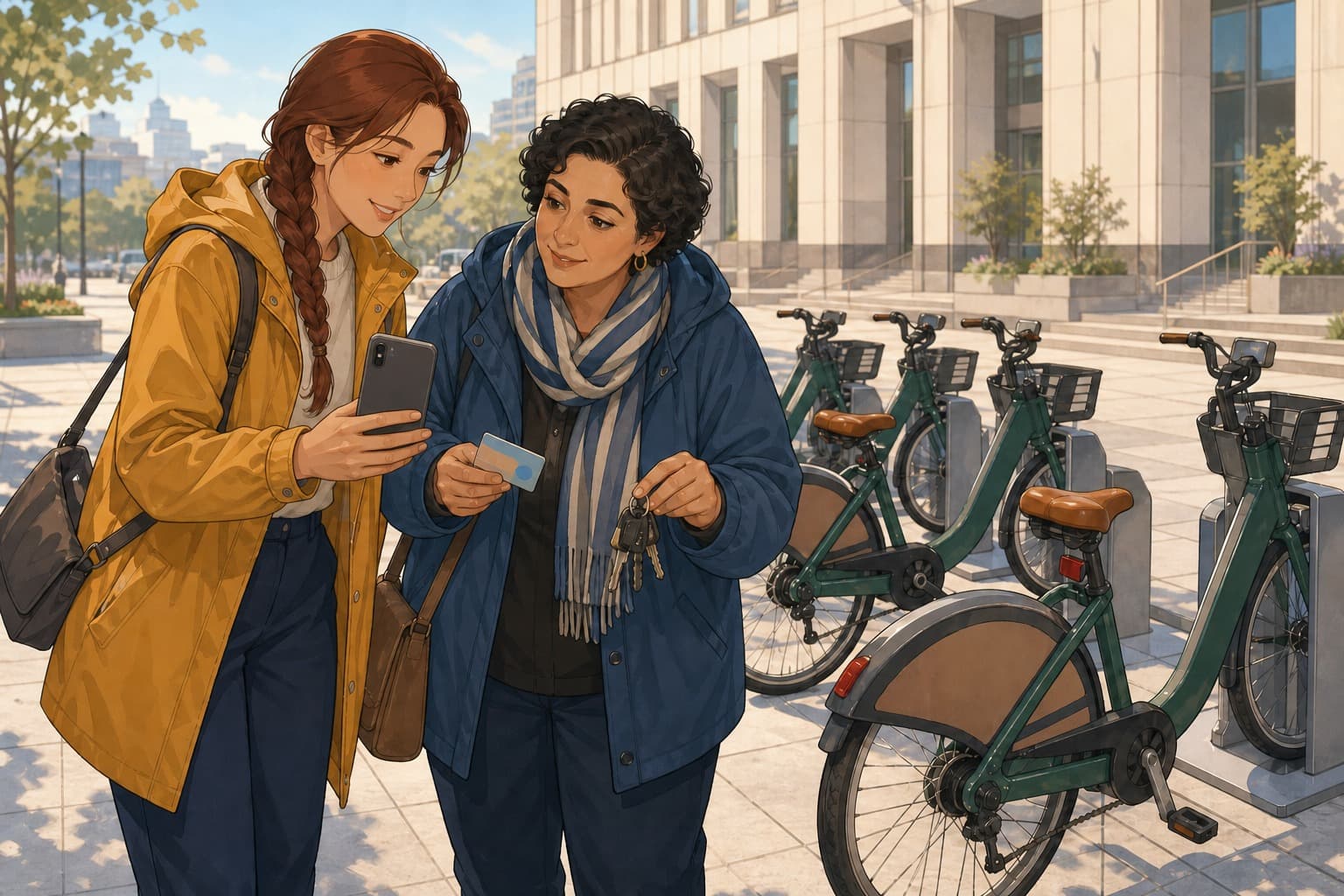
Before agreeing to meet, keep enough control to pause or leave the interaction. You can say, "I would like to stay on the app a little longer," or "I prefer a short video call before we make plans." A respectful match may have different preferences, but should not punish you for a safety boundary.
Use this pre-date check:
- Keep your home address, exact workplace, financial details, and daily routine private.
- Tell a trusted person the match's first name, profile, venue, and expected finish time.
- Arrange a check-in and decide what your contact should do if you miss it.
- Choose a public, populated venue and confirm that it will still be busy when you leave.
- Plan transportation that you control in both directions.
- Charge your phone and keep a payment method or fare for an unplanned exit.
An online search can sometimes reveal inconsistencies, but a clean search result is not a safety guarantee. Paid background-check products may contain incomplete or incorrect records. Use any check as one piece of context, not permission to ignore uncomfortable behavior.
A first-date plan that keeps you in control
The RAINN guide to safer dating recommends telling someone you trust about your plans, choosing a public and populated place, and keeping control of your transportation. A coffee shop, casual restaurant, museum, or other staffed venue can work well when it is busy and easy to leave.
Arrive and leave independently. Do not rely on your date for a ride, and avoid sharing your home address during the first meetings. If you drink alcohol, keep your own limit, watch your drink, and avoid anything that makes it harder to judge the situation or get home safely.
You can make the first meeting short: "I can meet for coffee from 2:00 to 3:00." A time limit creates an easy exit and can be extended only if you want to stay.
Meetty's first date tips can help you choose a low-pressure plan without turning the meeting into a test.
Leave if the person ignores consent, pressures you to change locations, tries to control your phone or transportation, becomes threatening, or makes you feel unsafe. You do not owe a detailed explanation. Move toward staff or other people, contact someone you trust, and call local emergency services if you face immediate danger.
Firm boundaries around money and intimate content
The simplest financial rule is also the strongest: do not send money or gifts to a romantic interest you have not met in person. The FTC includes wire transfers, gift cards, cryptocurrency, and other payments in this warning. Do not open an account, receive funds, move money, or make an investment for someone you met online.
A genuine connection can tolerate a financial boundary. If a person responds with urgency, guilt, threats, or a promise of unusually high returns, stop and get an outside view before taking any action.
Treat intimate images as sensitive information that may be copied or shared. If someone threatens to publish private material, do not send more content or money in the hope that the threat will stop. Save the messages and account details, report the account, and seek help from law enforcement or an appropriate support service. The person making the threat is responsible for the abuse.
Mutual boundaries apply throughout dating, including messaging, photos, location sharing, physical contact, and sex.
These dating rules for consent and communication provide useful language for early conversations.
Safety advice should fit the situation, not a stereotype
Romance scams and unsafe behavior can affect people of any age, gender, income, orientation, or level of digital experience. Risk may change with circumstances: a public profile can expose a young adult's campus routine, while savings or retirement details can make financial manipulation more damaging for someone later in life.
"We're all vulnerable. None of us should feel safe from being tricked with a scam or a fraud."
Jacqueline DrewOrganisational psychologist, cybercrime victimisation researcher
The FBI recorded about $584 million in reported confidence and romance fraud losses among complainants aged 60 and older in 2025. That figure supports focused financial safeguards, but it does not mean older adults are careless or that younger users are protected from fraud.
Use the same core rules for everyone: share personal information gradually, keep money separate, involve a trusted person, respect consent, and judge repeated behavior rather than demographic assumptions.
Quick action can limit harm after a scam or threat

If you suspect fraud, harassment, stalking, or coercion, focus on practical next steps rather than self-blame.
- Stop contact if doing so is safe. Block the account after saving the information you need.
- Preserve messages, screenshots, profile URLs, usernames, phone numbers, payment records, wallet addresses, and dates.
- Report the profile to the dating platform.
- If money was sent, contact the bank, card issuer, payment service, or cryptocurrency exchange immediately and ask whether the transaction can be stopped or recalled. Recovery is not guaranteed.
- In the United States, report suspected fraud to ftc.gov and IC3.gov. Report threats, stalking, assault, or other suspected crimes to local law enforcement. Use the relevant national reporting services if you live elsewhere.
If you are in immediate danger, move to a populated place and call your local emergency number. Emotional support can also help after manipulation or fraud. Being deceived does not make you responsible for another person's actions.
A slower pace creates room for safer choices
Online dating does not need to feel like an investigation. It does need enough time for words, identity, and behavior to become consistent. Protect personal details early, keep money out of online relationships, plan public first meetings, and pay attention to how a person handles boundaries.
The aim is not perfect certainty. It is a dating process in which you can pause, ask for support, and leave when the situation no longer feels respectful or safe.