


You’ve matched with someone, you stare at the chat box, and the idea of sending another “Hey, how are you?” makes you want to scream.
You need to change your opening messages because they’re holding conversations back.
The purpose of ice breaker questions for dating goes beyond showing off cleverness. They help move the conversation forward (It doesn’t hurt to ask: question-asking increases liking). The right question can turn an awkward silence into a real exchange-one that reveals humor, values, curiosity, and emotional availability.
“Conversation is a meeting of minds with different memories and habits.”
Theodore ZeldinHistorian, philosopher, author focusing on human relationships and conversation
This guide shows how to use ice breaker questions with purpose - whether you're on dating apps, on a first date, or dating after a breakup.
You’ll find:
- Smart, human ice breakers for dating (not cringe)
- Funny, deep, and situational examples
- When to use each type of question - and why
- Real-life dialogue snippets to show how they land
- Clear takeaways you can apply tonight
No fluff. No recycled advice. Let’s get into it.
Why ice breaker questions matter more than you think

Before we jump into examples, let’s clarify why dating ice breaker questions are such a big deal. The first minutes of a conversation set the tone for what happens next.
In early dating, both people are subconsciously asking:
- Is this person safe?
- Are they curious about me - or just bored?
- Do I feel relaxed or tense talking to them?
- Is this going to be another dead-end chat?
A good ice breaker question:
- Reduces social tension
- Signals emotional intelligence
- Invites a story, not a one-word answer
- Sets the tone for the entire interaction
Bad ice breakers do the opposite. They kill momentum.
What makes a good ice breaker question for dating
A good opener should first feel safe, then interesting. Good ice breaker questions for dating have a few clear qualities:
- Open-ended - it invites explanation, not a yes or no. One-word answers shut conversations down. Good answers should open the door to stories, personal experiences, or opinions.
- Specific - vague questions feel lazy. Specific questions show presence and intention. The way you ask questions shows that you genuinely want to know the other person.
- Emotionally neutral or positive - the goal is ease, not pressure. Early conversation should avoid questions that feel offensive, intrusive, or emotionally heavy. A good ice breaker feels safe to answer.
- Easy to answer without oversharing - early dating works best when answers don’t require emotional exposure or personal history. The question becomes excessive when a person needs to think about what they should disclose about themselves.
- Curiosity-driven, not approval-seeking - the best dating ice breaker questions come from genuine interest, not from a need to impress, perform, or get validation. People can feel the difference instantly.
On the flip side, bad ice breaker questions tend to fail for very predictable reasons:
- They feel like a job interview, with rigid, evaluative energy.
- The text sounds like it comes from google and reddit and dating advice lists because it uses generic language that lacks personal touch.
- The practice requires people to show their weaknesses because it occurs too soon which leads to emotional distress and complete emotional withdrawal.
- The attempt to create comedic content fails because it results in awkward situations that prevent people from connecting with each other.
A bad ice breaker feels like a test instead of an invitation. Good questions let people open up at their own pace, rather than making them feel interrogated.
Ice breakers for dating apps (that don’t sound like everyone else)
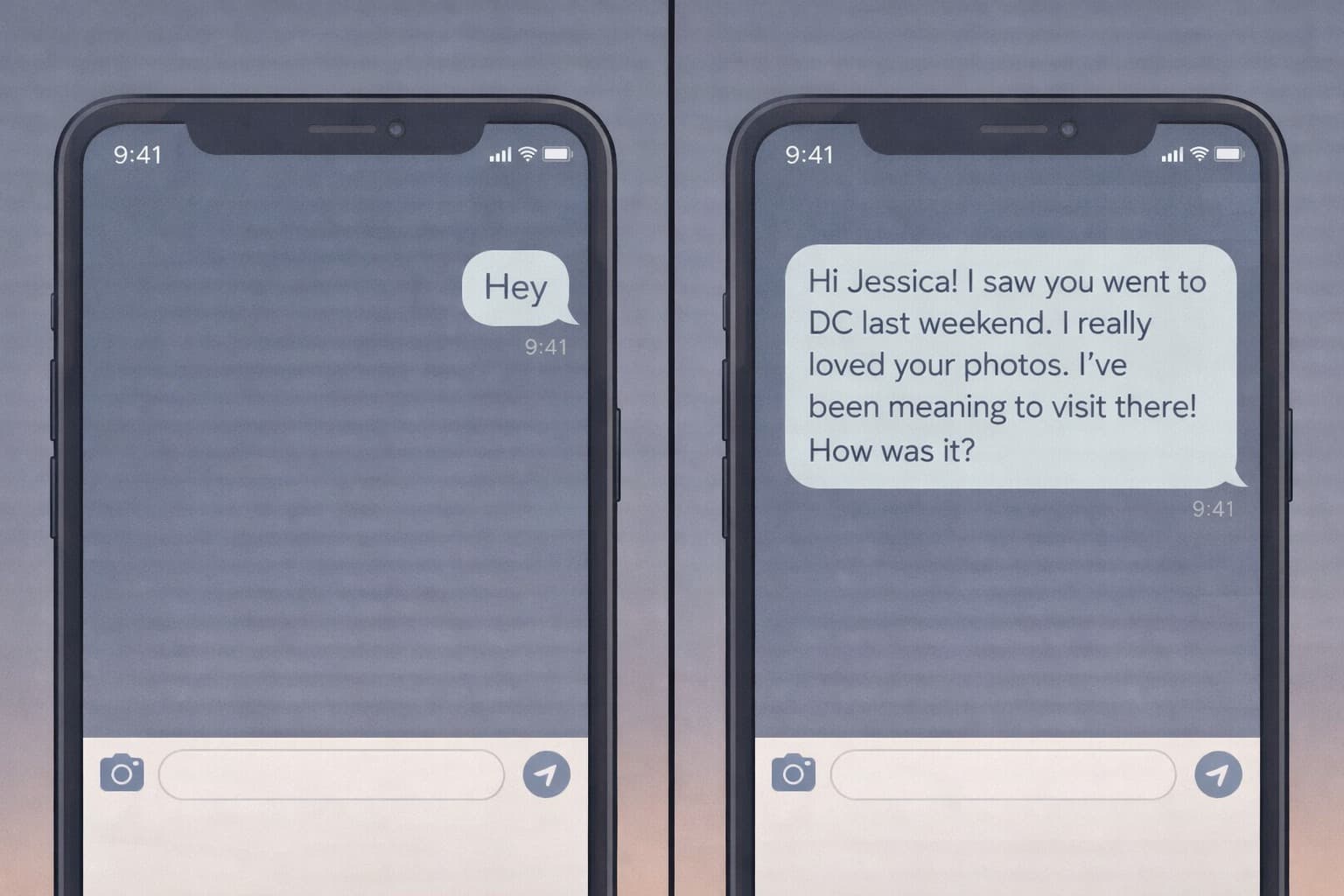
Dating apps are where most conversations die. Why? Because the openings are forgettable.
“Hey.”, “How’s your day?”, “What are you looking for here?” - these aren’t bad - they’re just forgettable.
Good ice breaker questions for dating apps work because they:
- Reference something specific
- Invite personality, not a résumé
- Feel low-pressure
Examples with context:
Instead of: “How was your weekend?”
Try: “What’s one small thing you did this weekend that made it better than expected?”
Why it works: it’s reflective, easy, and human.
The best ice breaker questions for dating apps stand out.
- "What habit did you start in the past year that actually stuck?"
- "What are you unexpectedly picky about?"
- "What random subject could you talk about for 10 minutes with no preparation?"
These are dating ice breaker questions that signal emotional awareness without oversharing (The role of disclosure in relationships).
Funny ice breaker questions for dating (without trying too hard)
Humor is powerful-but forced humor kills attraction fast. Funny ice breaker questions for dating should feel natural, not like a stand-up routine.
When humor works best:
- Early in the conversation
- When it reveals personality
- When it doesn’t put the other person on the spot
Funny ≠ ridiculous. Avoid “If you were a pizza topping…” unless irony is already established.
Funny ice breakers for dating that actually land
Funny ice breaker questions work when they invite shared humor.
- “What hidden ability do you consider to be your least valuable talent?”
- “What food do you pretend to enjoy while you actually dislike it?”
- “What childhood belief do you find humorous because you now recognize it as false?”
- “What is the smallest detail that continues to bother you in life?”
These questions work because they lead to storytelling instead of punchlines.
Hilarious ice breaker questions for dating (use sparingly)
The questions become most effective when people share existing connections with one another.
- “What’s the worst advice you’ve ever confidently followed?”
- “What completely unnecessary opinion would you defend forever?”
- “What tiny thing irrationally annoys you?”
The audience finds humor through their familiarity with the content instead of through its ridiculousness.
Ice breaker questions for adults dating (because life is different now)

At this stage of life, dating often looks different. The way people date in their 30s and 40s and after breakups differs from the way they date when they are 22.
Ice breaker questions for adults dating should respect:
- Lived experience
- Emotional boundaries
- Time and energy constraints
You’re not auditioning. You’re exploring compatibility.
The following ice breaker questions work effectively for adult dating.
- "What do you currently value more than you did five years ago?"
- "What does your ideal week look like from a practical perspective?"
- "What boundary did you learn to set through experience?"
- "What have you outgrown in the last few years?"
These are deep ice breaker questions for dating without being heavy.
Why do these questions work? They: signal maturity, encourage self-awareness, avoid trauma-dumping, create space for honesty. This is where real connection starts-quietly, respectfully, and with far less guesswork.
Deep ice breakers for dating (when you want more than small talk)
The moment arrives during a conversation when basic questions no longer meet the needs of the dialogue. You have moved beyond filling empty spaces to discovering the thoughts of your conversation partner. The term deep does not refer to something that causes extreme emotional response. It means something meaningful.
“Meaningful conversation is not about depth for its own sake, but relevance.”
Sherry TurkleSociologist, psychologist, professor at MIT, researcher of conversation and human connection
Deep ice breaker questions for dating are best used:
- After initial rapport
- When the conversation feels safe
- When curiosity is mutual
Deep dating ice breaker questions that feel natural
- “What’s something you’re still learning about yourself?”
- “What kind of energy do you protect these days?”
- “What makes you feel understood?”
- “What does ‘home’ mean to you now?”
Notice: none of these ask for trauma. They invite reflection.
Example dialogue
You: “what’s something you’ve changed your mind about in the last few years?”
Them: “I used to think love was supposed to feel a certain way all the time.”
This kind of question opens the door to deeper conversation and let’s trust build at a natural pace.
First date ice breakers: what to ask when you’re face-to-face

First dates come with a unique mix of anticipation, nerves, and heightened awareness. Face-to-face conversation requires presence, timing, and attention - not overthinking every word. Dating in person creates new opportunities to observe body language and tone and pauses.
Best ice breaker questions on a first date are:
- Grounded in the present moment
- Light but personal
- Easy to follow up on
People who want to date need effective ice breakers that work for face-to-face interactions.
- "What made you say yes to this date?"
- "What is an activity that you most enjoy doing by yourself?"
- "What is your preferred method of spending time during a quiet evening?"
- "What recent choice did you make that you feel happy about now?"
These ice breaking questions for dating feel conversational, not scripted. A good question gives your date space to speak freely while you obtain clues about their speaking patterns through their body movements and voice levels. Your ability to stay focused on how the other person reacts to you enables your date to share a personal connection with you through your conversation.
Best ice breakers for dating by personality
Early conversations often stall because people connect differently. Some people require time to think before they can connect with others, while other people need energetic, idea-based, and teamwork-based interactions. Dating ice breaker questions need adjustments according to your partner's personality because this method helps you understand their emotional state better.
“Communication works for those who work at it.”
John PowellPsychologist, author, specialist in interpersonal communication and relationships
The conversation will become more relaxed, secure, and authentic when you ask questions that match how people naturally interact with their environment.
For introverts
Introverts establish their strongest connections through deep conversations that occur at a slow pace and involve deep thinking. The internal world of a person becomes accessible through questions that enable them to share their thoughts without facing pressure to respond quickly.
- "What kind of conversations do you enjoy most?"
- "What helps you recharge?"
For extroverts
Extroverts express their thoughts through vocalization while their social connections and joint experiences provide them with vital energy. Questions that invite storytelling or reflection on social moments help them feel engaged quickly.
- “What kind of environments energize you?”
- “What’s the best social experience you’ve had recently?”
For thinkers
Thinkers find pleasure in discovering new ideas while experiencing changes in perspective and engaging in cognitive research. Their social connections develop through shared curiosity and intellectual honesty instead of immediate emotional contact.
- “What’s something you’ve changed your mind about?”
- “What topic could you talk about for hours?”
These questions show genuine interest in how someone thinks. That shows you care about how they think, which helps build trust early on.
What not to ask as an ice breaker (and why)

In early dating, timing matters just as much as intention. Some questions are not wrong in themselves; they’re simply asked too soon, because people need time to establish trust and comfort. The selection of dating ice breakers requires knowledge about which questions should not be asked.
Some questions kill attraction instantly - even if they seem logical.
Avoid these early on:
- “Why are you single?”
- “What went wrong in your last relationship?”
- “What are you looking for long-term?” (too early)
- “How many people have you dated from this app?”
The questions that are asked lead people to believe that their performance will be assessed rather than their true curiosity will be measured.
The dating ice breakers that should create open space between people instead force them into defensive behavior which creates pressure between them. Early conversations work best when both people feel relaxed (Trusting strangers: reciprocal self-disclosure). The setup needs to create an environment that allows people to develop curiosity before they start learning about their surroundings.
How to turn ice breakers into real conversation
The purpose of an ice breaker question is to serve as an entry point that leads to the main discussion. The question itself does not determine whether a conversation will stop or continue because the response to the question establishes your next move. The following-up process brings out the magical experience because it shows how people become interested and pay attention to things. Good conversation should progress through three distinct stages:
- Ask - offer something that would invite the person to go deeper.
- Listen to how something is said, not just the words.
- Reflect/extend - create a response that suggests you heard what the person meant, not just their words.
Example
You ask: “What’s something that always improves your mood?”
They respond: “Long walks with no headphones.”
If you nod and move on to something else, the conversation may quickly stall. Instead of switching to a different subject, you can address what you heard and promote further sharing:
You respond: “That sounds intentional. When did you start doing that?”
This kind of follow-up does two things: it validates their answer and gives them room to say more. You’re showing up, not performing. That’s how dating ice breakers become more than just polite conversation and actually become a connection with another person.
Ice breaker questions for dating after a breakup

The rhythm associated with dating after a bad breakup is different from dating before. The relationship between curiosity and caution exists together with both openness and self-protection. After a breakup, people usually need more time, caution, and emotional space (Depressive symptom trajectory following romantic relationship breakup and effects of rumination, neuroticism and cognitive control).
The following ice breaker questions work well at this stage:
- Provide emotional space while allowing room for both parties to explore themselves without any probing or pressure;
- Keep the discussion focused on the present, rather than what happened in the past;
- Help avoid comparisons to past relationships.
Following these principles will enable the participants in each other's lives to keep their emotional state steady and safe while they both work through their own feelings of adjustment.
Example questions:
- "What is something you are enjoying re-discovering these days?"
- "What feels different about dating at this stage of your life?"
- "What helps ground you?"
These questions will acknowledge the changes that have occurred without turning the discussion into an analysis of the history. They invite awareness, not reasoning. If the questions stated above are used wisely, they can serve as an effective dating ice breaker, allowing for both honesty as well as an opportunity to have lightheartedness, curiosity, and incremental trust between participants.
Ice breakers for dating that reveal compatibility (without pressure)
The process of determining compatibility between two people requires more than shared interests. Elements that define compatibility between two people include their core beliefs, daily habits, and their mutual expectations.
“Compatibility is an achievement of love; it must not be its precondition.”
Alain de BottonPhilosopher, author, founder of the school of life
Ice breaker questions for dating that hint at compatibility:
- “How do you usually recharge?”
- “What does communication look like for you when something’s off?”
- “What’s something non-negotiable for you now?”
- “What does consistency mean to you?”
These questions save time and emotional energy.
Using ice breaker questions in different dating scenarios

Context matters as much as the question itself, and the same approach won’t work equally well in every dating situation. The way you ask questions should change with the setting.
On dating apps - be specific, reference their profile, keep it light.
On first dates - use present-moment questions, observe reactions, follow up.
In long chats - go deeper gradually, mix humor with reflection.
For shy daters - use observational questions, avoid spotlight questions.
Adjusting your ice breaker questions for dating to the situation helps conversations feel natural. When questions match the setting and the person’s comfort level, dating ice breakers become a tool for flow - not friction.
Final takeaways: how ice breaker questions actually create connection
Let’s keep this practical. Ice breaker questions for dating work when they do a few simple things well:
- Create ease instead of pressure
- Invite stories, not short answers
- Respect timing and context
- Come from genuine curiosity
You don’t need to be clever or impressive. You need to be attentive.
Try this tonight: choose one question from this article. Ask it as written. Listen without planning your next move. Follow up once, based on what you hear.
Ice breaker questions help turn empty chats into real conversations. Real connection often starts with one good question. Sometimes that’s all it takes to move a conversation forward.