

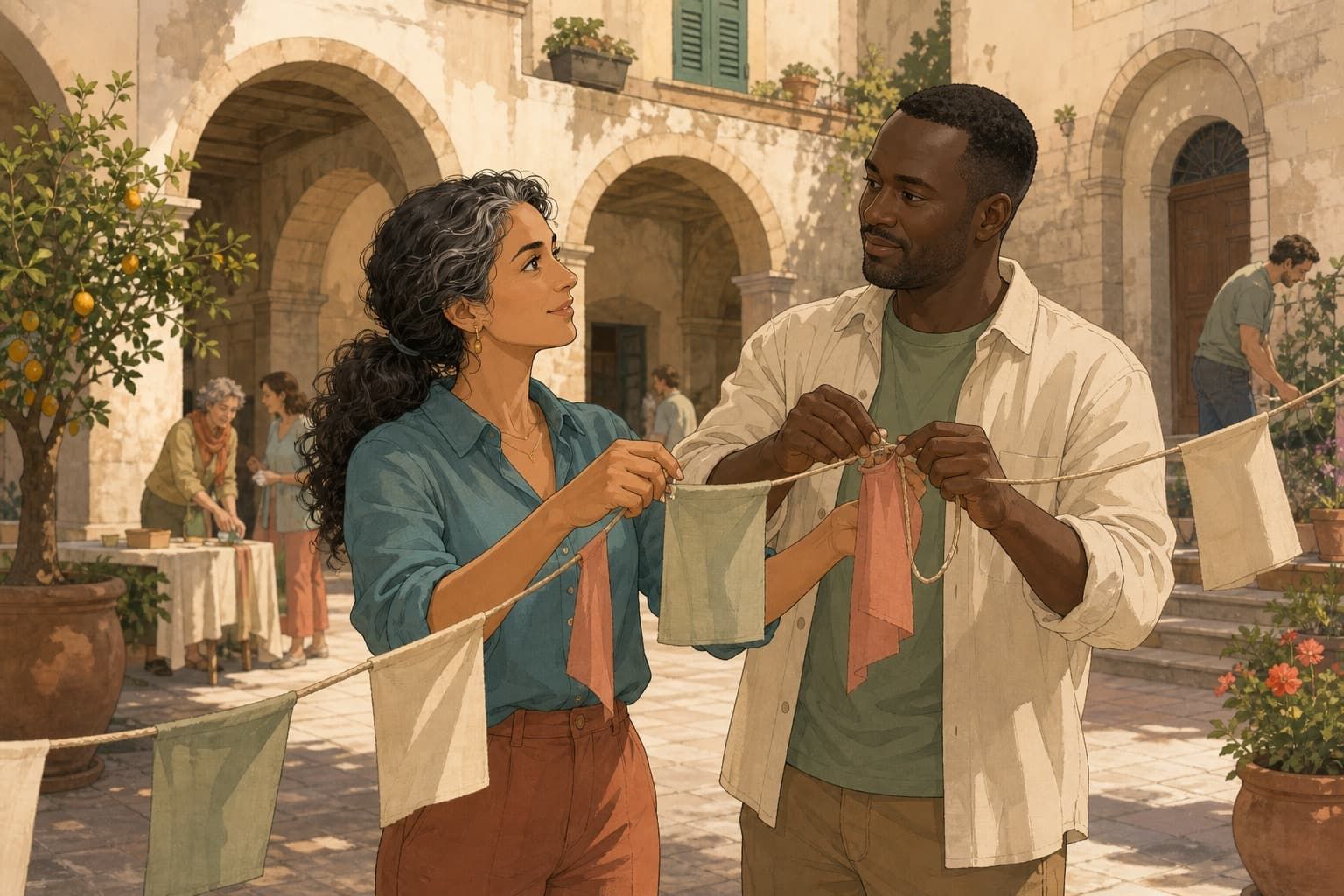
Dating an Italian woman may introduce you to new family traditions, regional customs, food, language, and ways of socializing. It can also tempt you to rely on familiar cliches about passion, fashion, jealousy, or strict families. Those shortcuts are rarely useful when you are trying to understand one person.
Italy is culturally diverse, and every woman has her own relationship with that culture. Someone from Milan may have different routines from someone raised in Palermo. A woman living abroad may combine Italian customs with those of another country. Personality, age, family background, faith, career, and past relationships can matter as much as nationality.
The best approach is simple: stay curious, ask instead of guessing, and notice how the person in front of you actually communicates.
"As humans, we assume too quickly, and can accomplish much more if we are curious about each other."
Dr. Eva GortnerLicensed Psychologist, PhD in Counseling Psychology
Culture matters, but it does not define her

Italian identity can be national, regional, local, or family-specific. Food, celebrations, accents, and everyday language may differ across regions and households. Istat's 2024 report on Italian, dialect, and other language use also shows that people use Italian and dialect differently depending on context. That is a useful reminder that there is no single Italian way to speak or live.
Ask open questions that let her describe her own experience:
- "What do you miss most about where you grew up?"
- "Are there traditions you still enjoy with your family?"
- "Is there a regional dish or celebration that means something to you?"
- "Do you speak a dialect or another language at home?"
These questions show interest without turning her into a guidebook. Listen to the answer instead of using it to confirm a stereotype.
Learning a few Italian words can be a warm gesture if it feels natural. "Ciao", "grazie", and "buongiorno" are easy places to start. You do not need to perform fluency or use pet names you would not say in your own language. A sincere effort matters more than a rehearsed line.
Family and social life need personal context
Family may play a visible role in the life of the woman you are dating, but closeness takes many forms. She might speak to relatives every day, see them mainly on holidays, live far away, or keep firm boundaries around family involvement. Do not assume that meeting her parents means the relationship has reached a particular stage. Ask what the introduction means to her.
If you are invited to a family meal or celebration, basic courtesy travels well: arrive when agreed, greet people, offer to bring something, and thank the host. If you are unsure about timing, gifts, shoes, or seating, ask your date before you arrive. That is more respectful than acting out a version of Italian family life learned from films.
Large or animated gatherings can feel intense if you come from a quieter household. You can say, "I am looking forward to meeting everyone. Is there anything I should know before we go?" This gives your partner room to explain names, relationships, and family dynamics without making her responsible for managing your every interaction.
Social plans may also include close friends, colleagues, or long-standing groups. Notice whether she prefers frequent group activities or more time as a couple. Neither preference is more authentically Italian.
First-date etiquette works best when expectations are clear

There is no universal Italian rule about who asks first, who chooses the venue, or who pays. Some people enjoy traditional courtship. Others prefer an equal, informal approach. The reliable way to avoid confusion is to make a clear invitation and leave room for her preference.
For example: "Would you like to get coffee on Saturday afternoon? I know a quiet place near the center, but I am happy to choose somewhere closer to you."
Choose a public place that makes conversation easy, especially if you met online. Arrive on time, keep your phone away, and dress for the setting.
Our first-date tips offer more ideas for planning a relaxed first meeting.
When the bill arrives, do not turn it into a test of culture or gender. You can offer once, accept her answer, and keep the moment easy:
- "I would be happy to get this."
- "Would you prefer to split it?"
- "Thank you. I can get the next one."
Good manners include attention, consent, and respect for time. If you want to kiss her, do not assume that enthusiasm in conversation answers the question. A direct "Can I kiss you?" can be both confident and considerate.
Conversation should explore the person, not the stereotype
Curiosity creates better conversation than a list of claims about Italian women. Ask about her interests, work, friendships, favorite places, and the life she is building.
If you need inspiration, these questions to ask on a first date can help you move from light topics to values without making the date feel like an interview.
Avoid comments such as "Italian women are so fiery" or "I bet you are an amazing cook." Even when intended as praise, they reduce her to nationality and gender. A specific observation feels more personal: "I like how you tell stories" or "You chose a great place."
If you met through an app, begin with something from her profile rather than her nationality. "That photo by the lake looks beautiful. Where was it taken?" gives her an easy way to answer.
For more examples, see how to start a conversation on a dating site.
Food, style, and leisure are invitations, not requirements

Meals can be an enjoyable way to share culture, especially when a dish has a family or regional story behind it. Ask what she likes rather than assuming she cooks, drinks wine, follows football, or wants every date to happen in an Italian restaurant.
If she invites you to cook together, participate. Ask how you can help, follow her lead in her kitchen, and show appreciation without exaggerating. If you dislike a food or have dietary restrictions, say so politely and early. Pretending to enjoy everything creates more awkwardness than a respectful preference.
The same principle applies to fashion and leisure. Looking clean and appropriate for the plan is considerate. Buying a new wardrobe to fit a stereotype is unnecessary. She may love art, hiking, gaming, nightlife, quiet weekends, or none of the activities associated with Italy in travel advertising.
A balanced relationship makes room for both people's interests. Take turns choosing plans: a neighborhood festival one weekend, your favorite trail or film the next.
Values and long-term goals deserve direct questions
Nationality cannot tell you whether someone wants marriage, children, exclusivity, a shared home, or a particular division of work. Those expectations should come from conversation.
Useful questions include:
- "What are you looking for from dating right now?"
- "How much time do you like to spend together in a relationship?"
- "How involved do you want family to be in major decisions?"
- "What does a fair division of responsibilities look like to you?"
- "Would you want to live in Italy long term, or somewhere else?"
You do not need to ask all of these on the first date. Bring them up as the relationship becomes more serious. The goal is to compare expectations before either person treats an assumption as an agreement.
Communication and conflict require respect in any language

An expressive speaking style is not the same as aggression. Some people speak loudly, gesture, interrupt with enthusiasm, or debate animatedly. Others do not. Pay attention to how her communication affects you and how she responds when you ask for a change.
"The biggest problem I tend to notice in couples from different cultures is a breakdown in communication and assumption of ill intent."
Dr. Sabrina RomanoffLicensed Clinical Psychologist, PsyD, professor, researcher, and couples therapist
During conflict, focus on the behavior and the issue rather than nationality:
- "I want to understand, but I find it hard to continue when we are both speaking over each other."
- "Can we slow down and take turns?"
- "I need a short break. Can we return to this in 20 minutes?"
Yelling, insults, threats, throwing objects, unwanted monitoring, and pressure are not cultural quirks that a partner must accept. They are behaviors that require a clear boundary. If you feel unsafe, leave the situation and seek support from someone you trust or an appropriate local service.
Meetty's broader dating rules for consent, boundaries, and communication can help you separate a cultural difference from behavior that undermines respect.
Possible joys and challenges of cross-cultural dating
Dating across cultures can add variety and perspective to a relationship. You may discover new places, words, celebrations, recipes, and ways of staying connected. It can also encourage both partners to explain habits they once considered obvious.
The challenges usually come from mismatched expectations rather than nationality itself. You may have different ideas about punctuality, privacy, family contact, public affection, spending, holidays, or how often to message. Distance and language can add practical pressure if one partner lives abroad.
A useful habit is to translate assumptions into questions. Instead of thinking, "Her family is too involved," ask, "Which decisions do you want us to make as a couple, and which ones do you discuss with your family?" Instead of deciding that she is not interested because she texts less often, ask what communication rhythm feels comfortable.
Differences do not automatically make a relationship exciting or incompatible. What matters is whether both people can discuss them without ridicule, pressure, or scorekeeping.
Practical habits make cultural differences easier to navigate

You do not need a rulebook for Italian women. A few habits will help you date one person well:
- Ask about preferences. Check plans, payment, communication, affection, and family introductions instead of guessing.
- Stay specific. Compliment what you genuinely notice and ask about the traditions she actually values.
- Share your own context. Cross-cultural curiosity should work in both directions.
- Learn useful language. A few phrases can show effort, but honest communication matters more than perfect pronunciation.
- Keep your boundaries. Respect for culture never requires accepting pressure, insults, or unsafe behavior.
For example, suppose she invites you to a Sunday lunch with relatives. Rather than arriving with a dramatic gift and a rehearsed speech, ask what time to come, whether you should bring anything, and how formal the gathering will be. That small conversation is more useful than any national stereotype.
A good relationship grows from curiosity, not a cultural script
Dating an Italian woman does not require you to become a movie version of an Italian boyfriend. It asks for the same qualities that support any promising relationship: attention, honesty, mutual attraction, clear boundaries, and a willingness to learn.
Enjoy the cultural details she chooses to share. Learn the words, recipes, places, and traditions that matter to her. At the same time, give her room to be more complex than a national label. The most respectful question is not "What are Italian women like?" It is "What is this woman like, and do we treat each other well?"